A National Court judge has mandated a new forensic copy of Juan Manuel Serrano’s iPhone. The move aims to secure the legal validity of evidence in the ‘Leire’ case. Serrano and his lawyer were present for the procedure.
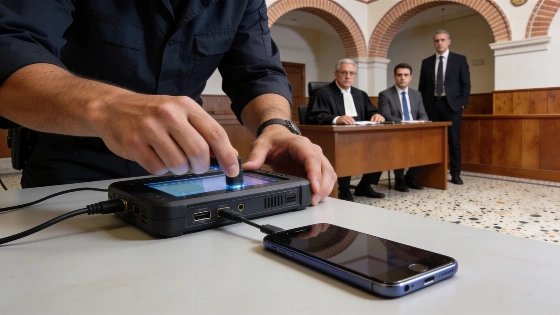
The National Court in Madrid has taken a decisive step in the high-profile ‘Leire’ case, with Judge Santiago Pedraz ordering a second forensic extraction of the iPhone belonging to Juan Manuel Serrano, former president of Correos and ex-chief of staff to Pedro Sánchez. This new procedure, carried out by the Guardia Civil’s Central Operative Unit (UCO) in the presence of both Serrano and his legal counsel, is intended to eliminate any doubts about the legality and authenticity of the digital evidence collected.
Serrano, who is under investigation for alleged involvement in schemes to manipulate public contracts and disrupt judicial proceedings affecting his party and the government, had previously challenged the initial extraction. He argued that neither he nor his lawyer were present during the first operation and questioned the judicial authorization for the seizure, as he had not yet been formally named as a suspect when his phone was confiscated on 27 May.
To address these concerns, Judge Pedraz ensured that the second extraction was conducted with all parties present, emphasizing in his order the need to guarantee the authenticity and integrity of the data for its inclusion in the case file. The process involved creating an exact, bit-by-bit copy of the device’s memory, including deleted files, using advanced forensic tools such as those developed by Cellebrite. This approach allows investigators to access not only standard files but also data stored within applications like Google Maps and WhatsApp, by performing a ‘rooting’ procedure authorized by the court.
The original seizure of Serrano’s phone occurred during a broader operation that included searches at the PSOE’s federal headquarters on Calle Ferraz and the homes of other prominent figures, such as former PSOE Organization Secretary Santos Cerdán and ex-Andalusian government official Gaspar Zarrías. At that stage, Pedraz had not yet formally charged Serrano, though court documents already suggested evidence of his collaboration in the alleged illicit activities. The phone was initially sealed and later cloned in judicial facilities, but the absence of Serrano and his lawyer during that process led to the current repeat operation.
In July, following a detailed UCO report, Judge Pedraz formally named Serrano as a suspect, citing his significant role in the network and his involvement in the appointment of Leire Díez to Correos in late 2021. Investigators believe this move allowed members of the alleged network to secure influential positions within the public administration for personal or third-party benefit. The inquiry also links Serrano to efforts aimed at undermining judicial cases involving the PSOE and the government, including meetings with figures such as retired commissioner José Manuel Villarejo, referred to in messages as “el de la boina.”
Forensic procedures like those used in this case are increasingly central to Spanish judicial investigations, especially when digital evidence is contested. The use of hash codes and certified forensic software is designed to ensure that any data presented in court is both authentic and tamper-proof. Similar legal disputes over the handling of evidence have arisen in other high-profile cases, as seen when Ceuta’s president threatened legal action over government inaction, highlighting the growing importance of procedural guarantees in Spain’s justice system. For more on the intersection of legal process and political controversy, see this report on Ceuta’s legal standoff with Madrid.
The ‘Leire’ case continues to draw attention due to its implications for public sector governance and the integrity of judicial proceedings. The outcome of the current evidence review may set important precedents for how digital data is handled in Spanish courts, especially in politically sensitive investigations. As the legal process unfolds, the focus remains on ensuring that all evidence is collected and preserved in strict accordance with judicial standards.