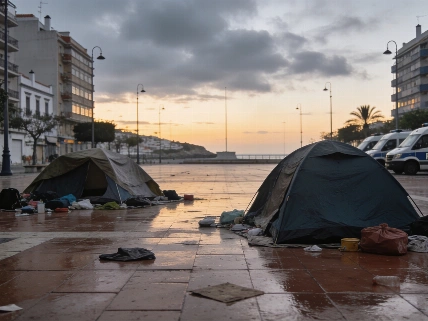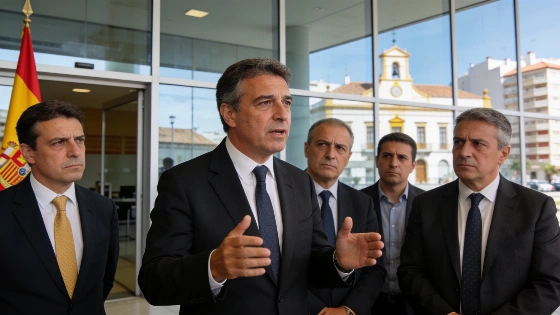
Ceuta’s leader has given Madrid 30 days to resolve the city’s crisis. Juan Jesús Vivas accuses the central government of near-total inaction. He warns of turning to the judiciary if no solution is found.
Ceuta’s political standoff with Madrid has reached a new peak as Juan Jesús Vivas, president of the autonomous city, issued a 30-day ultimatum to the central government. Vivas, representing the Partido Popular, sharply criticized what he described as the government’s “almost absolute passivity” in addressing the ongoing crisis. He warned that if the situation remains unchanged, he will seek intervention from the judiciary, including direct appeals to the heads of the Supreme Court and Constitutional Court.
Speaking after an extraordinary Council of Government meeting, Vivas accused the executive led by Pedro Sánchez of downplaying the severity of the crisis in early August and then failing to take meaningful action. He suggested there may even be a hidden motive behind the lack of decisive measures, hinting at a reluctance from La Moncloa to restore normality in Ceuta. The president made it clear that Ceuta would not accept further delays, stating that the city’s residents would continue to press for solutions through all available state institutions, including the Cortes Generales, the judiciary, regional governments, the federation of municipalities, and European bodies.
The dispute intensified after Health Minister Mónica García called on Ceuta’s authorities to provide state facilities for migrants. Vivas rejected her remarks as an attempt to shift responsibility and questioned her right to lecture Ceuta on humanitarian values. He insisted that the city’s population is already deeply affected by the crisis and that their rights must also be considered when making decisions about migrant accommodation.
According to sources within Ceuta’s government, the central administration has proposed several locations for housing migrants. The only site rejected by local authorities is the Harina factory, owned by the Ministry of Defence, due to its central location and neighborhood opposition. Other suggested sites, including areas near El Trampolín and El Príncipe, have not faced the same resistance. Vivas emphasized the need to balance the needs of migrants with those of local residents, questioning whether the rights of Ceuta’s citizens are being adequately protected.
This confrontation comes as Ceuta’s health system remains under strain from the recent influx of irregular migrants. The city’s authorities have repeatedly called for additional resources and immediate returns, as highlighted in recent coverage of the mounting pressure on local hospitals and services. For more on the impact of migrant arrivals on Ceuta’s healthcare, see the detailed report on the ongoing strain on Ceuta’s health system.
Ceuta’s unique position as a Spanish enclave on the North African coast has long made it a focal point for migration issues. The city’s government has often found itself at odds with Madrid over responsibility for managing arrivals and providing adequate support. The current standoff underscores the broader challenges facing Spain’s border regions, where local and national interests frequently collide. As the 30-day deadline approaches, the outcome of this dispute could set a precedent for how similar crises are handled in the future, both in Ceuta and across other Spanish territories.