Housing has displaced migration at the centre of Spain's political debate. Government measures enjoy broad support, but the left still struggles to show that its policies have changed daily life.
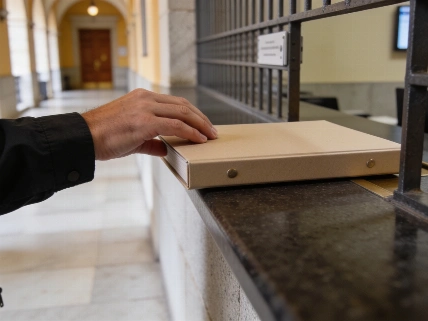
On Friday, October 2, Congress rejected two housing decrees backed by Pedro Sánchez's Government. One failed by 178 votes to 172. The other fell by 184 to 166, according to Euronews.
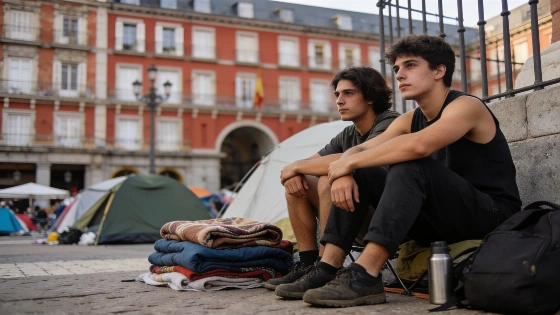
The defeat followed protests that began after Maricarmen was evicted. A camp appeared in Madrid's Puerta del Sol. Similar mobilisations took place in Barcelona, Sevilla and Málaga.
The issue has moved quickly.
Spain’s Congress rejected the two housing decrees on October 2, 2026, with voting margins of 178–172 and 184–166 against the Government’s texts.
The demonstrations pushed the Government to send both measures to Congress under an urgent procedure. PP, Vox and Junts voted against them. The result has also raised the possibility that Sánchez could call an early election and campaign on housing.
For now, sources in Moncloa, the PSOE and Sumar do not expect an immediate or dramatic change in voting intentions. They still expect migration to remain prominent. Their more hopeful reading of housing rests on one clear difference: public opinion is further to the left on housing than on migration.
The polling shows that gap.
On migration, views that left-wing parties describe as xenophobic have strong support. According to 40dB., 48.4% connect the regularisation of migrants with higher insecurity, while 42.8% reject that view. Sixty percent of respondents also say there are too many immigrants.
The figures are lower among PSOE and Sumar voters, but the concern remains. It reaches 45% among PSOE supporters and 24.4% among Sumar supporters. In Ceuta, the Government receives failing marks for its handling of migration.
The defeated package went beyond general rent controls. It included extending eviction protection for vulnerable families until 2030 and restricting investment-fund purchases of homes until 2028; another decree proposed automatic extensions of rental contracts. The second text was also opposed by the PNV and Coalición Canaria, in addition to the PP, Vox and Junts.
Housing creates a different political map. A March study by More in Common found that 44% saw speculation as the main problem. Another 33% blamed insufficient construction.
Research published this week by Universidad Carlos III found that 87% of Sumar voters and 76% of PSOE voters saw investment funds as an important or principal cause of the crisis. The figure reached 59% among PP voters and 50% among Vox voters.
The strongest support goes to measures linked to the progressive agenda. A 40dB. barometer conducted during the Maricarmen debate found that 67.5% backed housing price limits, even if landlords lost profitability.
Between 70% and 75% supported postponing evictions involving vulnerable people, regulating rents and imposing annual rent caps. More than half also supported higher taxes on owners of empty homes.
The right is still part of the debate.
Expanding the supply of social housing has the widest support. It is backed by 82.4% of voters across party electorates. Tax advantages for small landlords who offer affordable rents also receive more support than opposition among Sumar and Podemos voters.
Almost two thirds of the population consider rent limits in stressed areas necessary. That includes more than half of PP and Vox voters.
The electoral problem is not a lack of support for the Government's diagnosis. It is the lack of a convincing record of results.
Pablo Simón, author of the Universidad Carlos III study, sees housing as a more favourable policy frame for the left. He also sees it as a way for the Government to take the initiative. But he warns that the executive put itself at the centre of accountability when it called this the legislature of housing and created a Ministry of Housing.
Juan Francisco Caro of Opina 360 reaches a similar conclusion. The rapid response to Maricarmen reduced the possible political damage. Left-wing voters received the measures particularly well.
Around 1,000 protesters remained in the Puerta del Sol camp for at least a week, the Associated Press reported. The eviction of the 87-year-old woman gained a wider symbolic force.
The structural problem will remain after the headlines fade. A CIS figure shows the scale of it: only 13.2% believe access to housing will improve. The figure is 15.4% among PSOE voters and 9.6% among Sumar voters.
Housing has moved the political spotlight onto ground where the left can win arguments and mobilise its voters. It cannot yet say that it has solved the problem.
The failed decrees give Sánchez a strong campaign issue. They also expose its weakness. Voters may support the proposed tools and still judge the Government by one result: whether homes become attainable. On the available evidence, housing helps the left in debate but remains an unresolved liability at the ballot box.