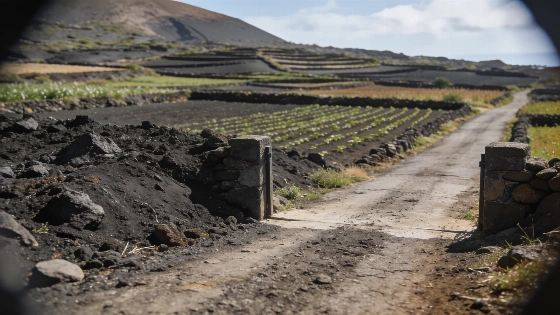
More than 200 applications to rebuild farms in the municipalities of Valle de Aridane are waiting for agricultural tracks to open. Without access routes, work cannot begin, according to Nieves Lady Barreto, the Canary Islands’ regional government minister for the presidency.
The issue came up at the Joint Commission for the Reconstruction of La Palma on 12 November. The meeting ended without agreement on a transfer of €300 million from Spain’s central government to the Canary Islands government. The amount covers state contributions for 2024, 2025 and 2026. Europa Press reported that the meeting also produced no commitment to extend the 60% income tax reduction for La Palma residents into 2027.
The €300 million package is separate from a specific €100 million reconstruction allocation that Barreto said remained listed in section 37 of the Ministry of Finance’s budget as the “Plan de Recuperación para La Palma.” With Spain’s national budgets extended, the line remained visible in the 2026 accounts. Spain’s Minister for Territorial Policy, Ángel Víctor Torres, said the 60% reduction was included for 2027, while Barreto said its continuation required a Council of Ministers decision.
Barreto said both measures depended on a Council of Ministers decision and argued that the commitments should be settled before the current legislature ends. She said they are expressly included in the state’s General Budget Law.
The track access problem ties the funding dispute to work on the ground: the Cabildo and local councils need resources to restore agricultural routes before the pending farm works can start. Island president Sergio Rodríguez said the Cabildo’s request to suspend the spending rule, so it could direct more of its own resources to reconstruction, had not been accepted.
Barreto also outlined the Canary Islands government’s spending on agricultural recovery. It allocated €16.5 million in 2024 to compensate the banana sector for lost income, then used its full €100 million surplus in 2025 to pay owners the value of farms they had lost. Separately, the first volcanic compensation payments exceeded €10.2 million and came from a fund of more than €100 million.
She said €23 million from the regional government’s 2026 surplus would go towards a specific PEPAC for the island, with a further €9 million intended to complete payments for ash removal. The commission’s failure to reach agreement leaves the requested state transfer and the 2027 tax rebate unresolved. Agricultural organization Asepalma has called for the commission to guarantee funds and the priorities agreed for farmers affected by the volcano.
Decree-Law 9/2026 changed reconstruction rules for properties, agricultural holdings, businesses and land affected by the lava. It allows farm operators in designated agricultural-recovery areas to relocate to other parcels if they have sufficient rights and meet safety conditions. It also provides supplementary compensation for owners unable to rebuild on their original plots because of the planned expansion of the Cumbre Vieja Natural Park. The compensation calculation is linked to the sale value of suitable rebuilding land within the lava-flow area and the previous use of the affected property.
The rules also allow affected banana farms to be acquired by new producers, who assume the former owners’ rights and obligations, including POSEI support. New operators have up to two years to restart production, and the restored holding must remain in production for at least five years.
La Palma’s recovery has also faced other pressures, including the island’s flood alert.