A Red.es contract award is under judicial scrutiny for alleged arbitrariness. The Civil Guard highlights emails suggesting favoritism toward a specific bidder. The case is part of a broader investigation involving public funds.
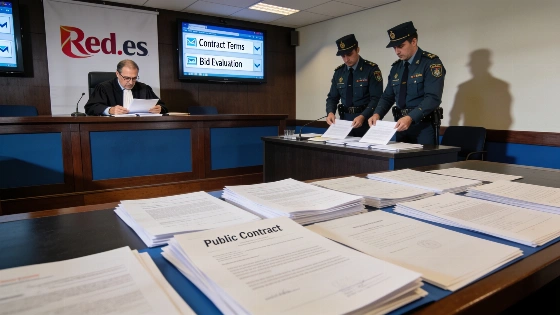
Judicial scrutiny has intensified over the awarding of a public contract by Red.es, after the Civil Guard's Central Operative Unit (UCO) uncovered internal emails suggesting irregularities in the selection process. The investigation, now in the hands of Judge Juan Carlos Peinado, centers on whether the process favored a consortium involving The Valley and a company linked to Juan Carlos Barrabés. According to the UCO's report, the evaluation criteria may have been manipulated to benefit this particular bidder, raising concerns about the integrity of public procurement.
One of the emails analyzed by investigators, sent during the adjudication process, explicitly advised evaluators to consider Barrabés' proposal as the preferred option, implying that competing bids should be downgraded. The Civil Guard's findings, delivered to the European Public Prosecutor's Office in February, point to deliberate actions by those responsible for the assessment, suggesting that the outcome of the tender was influenced by subjective factors rather than objective merit.
Judge Peinado clarified on June 19 that Juan Carlos Barrabés is currently the sole individual formally charged in this branch of the investigation, which focuses on alleged misconduct and fraud affecting the financial interests of the European Union. The case forms a separate piece of the broader 'Begoña Gómez' investigation, which has drawn significant public and media attention due to its implications for the management of EU funds in Spain.
The UCO's report, as first revealed by El Español and reviewed by this publication, details how the conditions set for evaluating the bids had a direct impact on the final result. Investigators argue that these conditions were intentionally designed to favor the consortium led by Barrabés, with full awareness on the part of the evaluators. This approach, they suggest, undermined the fairness and transparency expected in public tenders.
Allegations of political influence and irregularities in public contract awards have surfaced in other high-profile cases in Spain in recent years. For example, a previous case involving state aid for Tubos Reunidos highlighted how internal contacts and lobbying efforts can affect major financial decisions, as discussed in an earlier report on government intervention in corporate bailouts.
Red.es, a public entity responsible for promoting digital transformation in Spain, manages significant EU funding for technology and innovation projects. The current investigation underscores the ongoing challenges in ensuring transparency and accountability in the allocation of these resources. While only one individual is formally charged at this stage, the case may have broader implications for public procurement practices and oversight mechanisms in Spain. The outcome of the judicial process is expected to influence future controls over the distribution of EU funds and the conduct of public officials involved in such tenders.