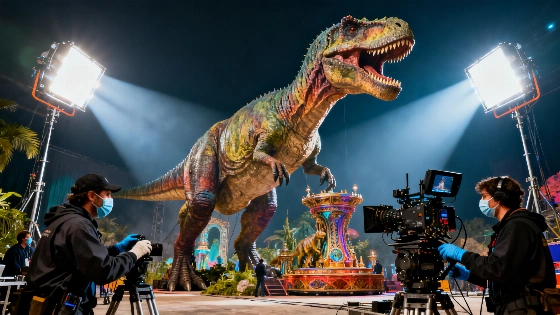
‘Jurassic World Dominion’ became the most expensive film in history, with costs reaching $658.8 million. Despite earning over $1 billion at the box office, its real profitability is now under scrutiny due to high expenses and revenue splits.
‘Jurassic World Dominion’ has officially become the most expensive film ever produced, with a total budget of $658.8 million, according to a recent financial report cited by Fortune. This figure surpasses the previous record held by ‘Star Wars: El despertar de la Fuerza’, which cost $638.9 million. The new data highlights a growing challenge in the film industry: even blockbuster box office numbers do not guarantee substantial profits.
The production of ‘Jurassic World Dominion’ faced extraordinary circumstances. Filming took place during the COVID-19 pandemic, leading to significant delays, strict health protocols, and extended shutdowns. Cast and crew, including Chris Pratt and Bryce Dallas Howard, were confined for months near Pinewood Studios to ensure the project could be completed safely. These disruptions drove costs far beyond initial projections, with ongoing expenses for sets, facilities, and personnel during the production halt.
Despite these challenges, ‘Jurassic World Dominion’ achieved a global box office gross of over $1.004 billion. Traditionally, such a figure would signal a major financial success. However, as Fortune notes, studios typically receive only about half of box office revenues, with the remainder going to cinemas. When combined with the film’s unprecedented production costs, this revenue split casts doubt on the movie’s actual profitability.
Industry insiders, including Ben Affleck, have recently pointed out that marketing expenses are often excluded from official production budgets. These additional costs, along with the share retained by theaters, mean that a film generally needs to earn at least twice its production budget to break even. By this standard, ‘Jurassic World Dominion’ may not have covered its full costs, especially when marketing and distribution are factored in. The analysis does not include potential income from home releases or television rights, which could improve the overall financial picture.
The case of ‘Jurassic World Dominion’ illustrates a broader trend in Hollywood: surpassing the billion-dollar mark at the box office no longer guarantees massive profits. Rising production budgets, escalating marketing campaigns, and shifts in audience habits due to streaming have made the financial landscape for major releases more complex. Even the most high-profile blockbusters can face uncertain returns, challenging long-held assumptions about what constitutes a successful film.
For context, the film industry has seen a steady increase in production costs over the past decade, driven by technological demands and global events like the pandemic. While box office revenues remain a key metric, ancillary markets such as streaming, merchandising, and international sales now play a larger role in determining a film’s long-term profitability. The experience of ‘Jurassic World Dominion’ may prompt studios to reassess risk and investment strategies for future large-scale projects.