Kia has surged to become one of Spain’s most popular car brands, outpacing traditional rivals and holding its ground against a wave of Chinese newcomers. The updated Kia XCeed, with new hybrid and petrol options, marks the latest move in this high-stakes battle for Spanish drivers.
Spain’s car market looks different in 2026. Kia has registered over 44,000 cars in just nine months. That puts the Korean brand nearly neck and neck with Seat and Renault. Kia now ranks fifth in national sales. It has sold more than twice as many cars as Opel. For private buyers, Kia is on track to hit the podium for the sixth time in seven years. Independent market reports confirm Kia’s strong 2026 run. The brand is now in Spain’s top five, just behind Seat and Renault. Buyers are changing their habits fast.
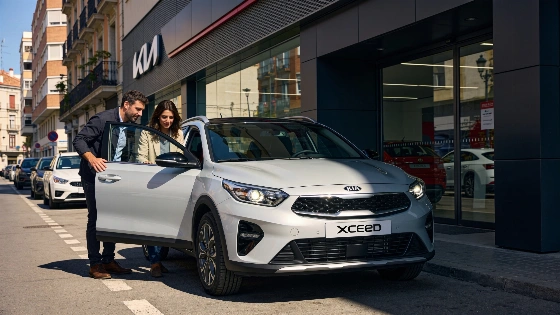
Kia’s climb is no fluke. The company just rolled out its updated XCeed. This launch lands as almost 40 Chinese brands flood Spain, each pushing hard with low prices and quick-fire deals. Emilio Herrera, president of Kia España, doesn’t mince words: “The low-price positioning is the most dangerous there is, because at any moment another brand can come in with even lower prices and push you out.” Spanish automotive outlets report the new XCeed is already at official dealers. Both petrol and mild hybrid versions are available, starting at 19,860 euros with loyalty programs.
Chinese brands have rapidly increased their share of Spain's new car market from just 2.7% in 2022 to around 14.5% by August 2026, marking one of the fastest structural shifts in recent automotive history.
Herrera’s warning is grounded in numbers. Chinese brands now make up 15% of all new passenger car sales in Spain. In the private channel, their share is 20%. Several independent sources confirm these figures. Herrera says the market can’t absorb so many new players. “If you add up all the ambitions and sales targets they claim, they’d need to reach 80% market share. That’s not going to happen.” He points to a real problem: infrastructure. “It’s very difficult to find new facilities. If Kia loses a sales point, it’s almost impossible to replace. Now imagine 40 new brands all looking for space. That’s my biggest concern with the Chinese brands.”
Kia isn’t fighting on price alone. The brand is betting on image and product quality. The new XCeed is proof. Buyers can pick from three petrol engines or a mild hybrid (MHEV) version. All carry the ECO label from the DGT. The MHEV is expected to make up nearly half of XCeed sales. That’s especially true for drivers in Spain’s growing low-emission zones. Industry analysts say Chinese competition is forcing established brands to do more than offer discounts. Kia is leaning on its dealer network, after-sales service, and strong resale values.
MG remains the leading Chinese brand in Spain, while BYD is rapidly closing the gap. Other brands such as Omoda/Jaecoo and Ebro are also showing notable growth, reflecting the increasingly competitive landscape.
The XCeed’s interior has been upgraded. It now features advanced connectivity, better materials, and subtle design changes. The base 1.0 T-GDI petrol model starts at 19,860 euros. The MHEV with automatic transmission begins at 20,860 euros. For more power, the 1.6 T-GDI offers 150 or 180 CV. Prices for these versions range from 24,760 to 30,660 euros. Boot space runs from 380 to 426 liters, depending on the model. The car is 4.38 meters long and seats five adults comfortably.
Kia’s strength comes from knowing what Spanish drivers want. Compact SUVs now make up over half the market. Kia’s Sportage, Stonic, Niro, and XCeed are all top sellers. Hybrid and mild hybrid cars (HEV and MHEV) now hold a 47% market share. Forty percent of Kia’s sales are in this category. Electric cars make up nearly 18% of Kia’s mix. Combustion engines—mostly petrol—still account for over 40%. More than 80% of cars sold in Spain still run on combustion.
The market is packed. For established brands, it’s not just about survival. They need to stand out. Kia’s rise shows how to build real loyalty in a market where price wars and new arrivals threaten the old order. The company’s focus on image, technology, and a clear product plan has helped it weather the storm. As reported earlier, the number of brands on Spanish roads has exploded to record levels.
Kia refuses to race to the bottom. Instead, it invests in models that fit Spanish drivers—SUVs, hybrids, and useful tech. The brand’s image keeps buyers coming back, even when prices aren’t the lowest. Many newcomers may not last. Kia’s steady climb proves that substance and strategy still win out over quick disruption.