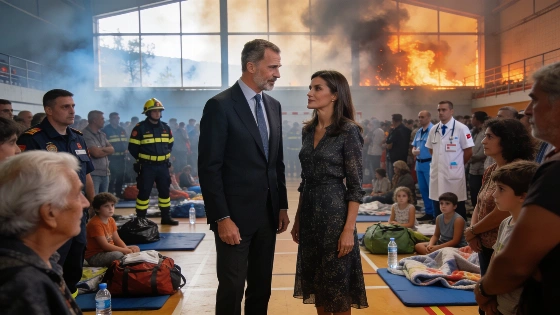
King Felipe VI and Queen Letizia visited Villamanta in Madrid’s western Sierra on Sunday, meeting residents forced to evacuate because of ongoing wildfires. The royal couple toured a local sports center being used as a shelter for hundreds of people from Villa del Prado, Aldea del Fresno and other affected towns. During the visit, King Felipe VI emphasized solidarity and praised coordination among emergency services, including the Military Emergency Unit (UME) and Civil Protection, as thousands of personnel remained deployed across the region.
Information from Madrid’s government delegation, the wildfires had displaced over 35,000 people, with more than 20,000 still confined to their homes. Emergency shelters had been set up in 14 municipalities and were hosting around 3,000 residents. The fires, which were also affecting Ávila and Toledo, had consumed approximately 77,000 hectares, Civil Protection reported. The scale of the disaster drew a impressive response from local and international teams.
Later reporting identified the Madrid emergency as the Sierra Oeste fire, formed when three fronts in Villa del Prado and San Martín de Valdeiglesias merged. Ecologist Jorge Manzano and other specialists linked the fire’s severity partly to inadequate grazing and vegetation management, which can allow combustible material to build up. A post-fire assessment reported that Navas del Rey had lost about 85% of its municipal territory. The Madrid branch of the Union of Small Farmers and Ranchers (UPA) estimated that 18,500 hectares of usable agricultural land had burned, showing the damage extended beyond forested areas.
Madrid’s regional president, who accompanied the royals, said institutional cooperation had been effective so far but warned that the situation remained unresolved. She stressed the need for continued coordination, noting that the fires were not yet under control. The president also called for a thorough review of the causes and prevention strategies, cautioning against fueling tensions between affected communities.
King Felipe VI expressed support and understanding for those forced to leave their homes, recognizing the emotional toll and the loss of irreplaceable natural heritage. Queen Letizia stressed the importance of listening to evacuees, many of whom faced uncertainty about when they could return and what they would find. The King reiterated that protecting human life and ensuring safety were the top priorities, followed by safeguarding towns and minimizing damage. He urged residents to follow official instructions as the emergency continued.
International assistance included personnel and equipment sent by Portugal, France, Greece and Turkey to support firefighting efforts. King Felipe VI noted the importance of the European Union’s support mechanism and said further reinforcement might be necessary, especially as France was battling another major wildfire at the same time. For more context on the impact of the fires and the ongoing emergency response, see this detailed report on how wildfires have disrupted life across central Spain.
The Sierra Oeste emergency formed part of an exceptionally severe national wildfire season. EFE Verde reported 4,944 fire incidents during the June-September high-risk period, including 45 large wildfires, while 245,653 hectares of forest burned, about 2.5 times the average for the previous decade. The Madrid fire fronts also came close to joining the Burgohondo fire in Ávila, adding to the operational challenge across regional boundaries.
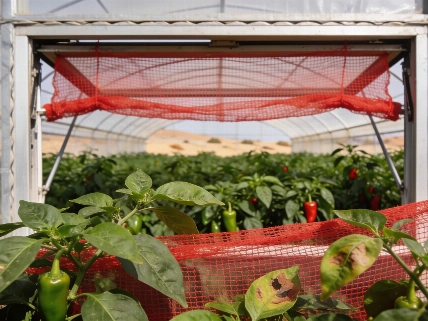
Spain’s government later estimated that the 2026 fires had affected about 270,000 hectares nationwide, including roughly 60,000 hectares of agricultural land. On October 20, the Council of Ministers approved up to €9 million in assistance to complement agricultural insurance for farms damaged by the fires. Agriculture Minister Luis Planas presented the measure as a response to a season marked by large fires across the country. Separately, UPA de Madrid’s estimate of 18,500 burned hectares of usable agricultural land in the Sierra Oeste pointed to the recovery needs facing affected rural communities.
Spain has faced increasingly severe wildfire seasons, with climate conditions and land management practices contributing to the risk. The crisis in Madrid, Ávila and Toledo exposed the vulnerability of rural and peri-urban communities to fast-moving fires. Emergency services have adapted by improving coordination and investing in rapid-response capabilities, but displacement and environmental loss remain impressive challenges. Recovery will require sustained effort and cooperation at all levels.