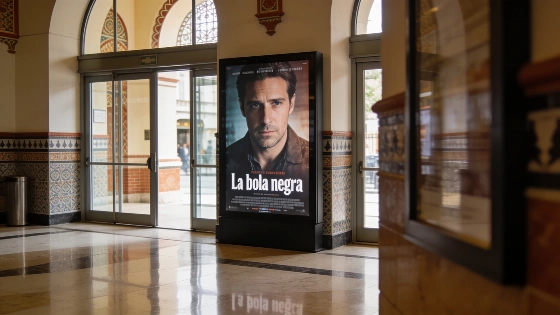
In its first three days in cinemas, La bola negra drew 610,000 viewers and grossed 4.7 million euros. That makes it the second-biggest opening for a Spanish film in the past ten years, behind only Torrente presidente. On its first day, it drew about 175,000 viewers and grossed between 1.3 and 1.32 million euros, information from preliminary estimates reported by specialist media. Those early figures were still subject to revision. The film opened in 414 cinemas, the widest Spanish release of the year.
The release followed a run of awards. At Cannes, Los Javis won the Best Director award. The film then screened in Toronto and Sydney, where it won the Audience Award.
The Spanish Film Academy selected La bola negra as Spain’s entry in the Oscar race. The film enters the process with support from audiences and several juries. Now the campaign will aim to carry that festival and box-office momentum to the United States.
San Sebastián added another record. After its premiere at the San Sebastián Film Festival, the film won the Ciudad de Donosti Audience Award with a score of 9.40, the highest yet achieved by a Spanish film in that category.
The story spans three eras. Its account of a century of homosexuality in Spain moves from 1932 through 1937 to 2017. At first, each period seems independent; their connections emerge gradually, leading to a shared conclusion.
The international campaign is also being built around the ensemble. Infobae reports that Netflix is presenting La bola negra as a collective project and preparing a strategy that includes acting nominations for several cast members.
The film does not rely on a single linear plot. Each period offers a different perspective. The ties between the characters become clear as the story unfolds, and the ending reshapes what viewers have seen.
The filmmaking approach also breaks with convention. Javier Calvo and Javier Ambrossi shot on 35 mm, a format now screened in only three cinemas in Spain. At one of them, the directors took part in a discussion after the film.
During that discussion, they explained how Álvaro Lafuente, known as Guitarricadelafuente, ended up playing the lead. Los Javis had written the role with him in mind and presented the project before finishing the script. The singer took on a particularly demanding acting role.
Javier Calvo also said that Pedro Almodóvar read the script and warned him how difficult the character would be. Calvo recalled Almodóvar’s work with singers such as Rosario in Hable con ella and Miguel Bosé in Tacones lejanos. For Calvo, singing is also acting: every vocal choice and every glance tells a story.
Lafuente even helped shape the drama. In the film, his mother is the woman killed in a bombing. The actor agreed to use that situation to bring his character to tears. The scene shows the level of commitment the directors sought for a work about historical memory and sexual identity.
The box-office response confirmed what the festivals had already suggested. As our coverage of San Sebastián reported on the rise of Spanish cinema at the festival, La bola negra became that edition’s major audience event. La Vanguardia and Box Office España reported that interest had begun before the release: advance sales surpassed those for La odisea, and the film reached cinemas with 414 copies. It was the year’s widest Spanish release.
La bola negra also became one of the decade’s biggest Spanish releases and put Los Javis in the Oscar race.