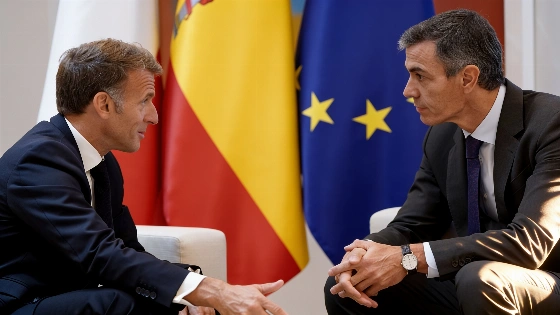
Emmanuel Macron and Pedro Sánchez are at odds over how to handle China’s electric vehicle push. While France demands tough tariffs, Spain courts Chinese investment to boost its own manufacturing know-how.
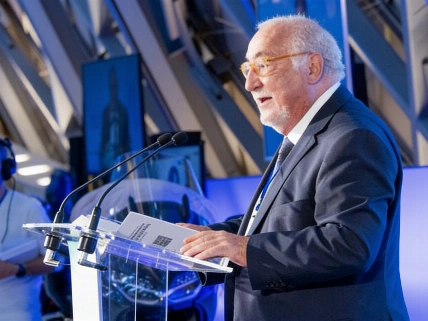
Macron came to Madrid with a warning. He stood before business leaders from Spain and France and called out the flood of cheap, state-backed Chinese goods. He didn’t hold back. “Today, while we are speaking, we Europeans have a trade deficit with China of 1,000 million euros a day. Every day, 1,000 million,” Macron said. He wants Europe to fight back. For him, tariffs are the answer. Reports from the Madrid meeting confirm that this €1 billion daily deficit has become a rallying cry for those pushing for stronger trade barriers.
Sánchez is taking a different path. After meeting Xi Jinping in Beijing, the Spanish prime minister has opened the door to Chinese carmakers. His government skipped EU votes on tariffs. He argues that bringing Chinese factories to Spain could help the country learn to build electric cars and keep jobs at home. “We need a transfer of technology in sectors where China is now ahead,” Sánchez said. He singled out the auto industry as key for Spain’s future. Reports from the Madrid summit confirm Sánchez’s focus on technology transfer and his warning about shutting Europe off from the world.
Spain previously abstained from the EU vote on tariffs for Chinese electric vehicles, highlighting Madrid's softer stance compared to Paris.
The split is now visible on the ground. SAIC Motor, the Chinese company behind MG and Roewe, plans to put 200 million euros into a new plant in Ferrol. The goal: assemble up to 120,000 vehicles a year and create about 1,000 direct jobs. Geely is investing 221 million euros in the Almussafes plant in Valencia. It’s taking a 34% stake and says it will keep 2,000 jobs while making five models. Chery, already working in Barcelona’s Zona Franca with Ebro, has put in over 150 million euros and aims for 50,000 vehicles a year. Sánchez says these deals are about more than jobs. “We need technology transfer in sectors where China is leading, and these are vital for Spain and Europe.” But independent research groups point out that many of these projects are still just plans. Not all the details have been confirmed by primary sources.
Learning from Chinese carmakers is not a sure thing. Alicia García-Herrero, chief Asia-Pacific economist at Natixis, is blunt. “If there are no tariffs, SAIC, which faces 35% tariffs, would not come to manufacture in Spain because it would be more expensive for them. But we are not going to learn from them, especially SAIC, which is a state-owned company with draconian national security rules.” She says Chinese law keeps technology transfer tightly controlled. The Ferrol project is described as “complete vehicle assembly.” That means finished parts arrive by ship and are put together in Spain. The work covers bodywork, wiring, upholstery, suspensions, doors, and final testing. But the real know-how may stay in China. The Carnegie Endowment’s analysis says the depth of technology transfer is still unclear. Most deals focus on assembly, not full manufacturing or research and development.
Macron’s frustration runs deeper. Two decades ago, Western companies rushed into China for cheap labor and a huge market. China took their technology, copied processes, and poured state money into its own industries. Now China leads in electric vehicles, batteries, and industrial machines. It exports subsidized products at prices European firms can’t match. Macron’s message is blunt: “What were once European strengths are now in a dramatic situation.” Ursula von der Leyen has echoed these fears at the EU level. She warns of a "second China shock" and points to the €1 billion daily trade deficit as a reason for tougher Brussels policies.
The core of the current dispute is the EU’s approach to Chinese electric vehicles and industrial subsidies: France supports tougher measures, while countries like Spain fear retaliation and loss of investment.
Both leaders agree on one thing. Europe can’t afford to be naïve. Macron wants a united EU, new trade tools, and faster protection for European industry. Sánchez admits the EU’s trade deficit with China hit a “brutal” 360 billion euros last year. But he says closing doors is not the answer. “We need to reduce our dependencies, but not shut ourselves off. That is not the European spirit,” he said. Reports from Madrid show both leaders trying to balance openness with caution.
Spain is betting on Chinese investment. The hope is for technology to spill over and keep factories busy. France is holding the line on tariffs and fair play. The outcome will shape Spain’s auto sector and Europe’s industrial future. Independent analysts say Spain wants to join the electric vehicle value chain. The EU wants to protect its market from a wave of Chinese imports.
New Chinese models like Omoda’s 9 SHS are making waves for their design and performance, as reported earlier. The stakes for Spain’s manufacturing push are rising. The real test is coming. Will these investments bring more than assembly lines? Can Europe find a common plan before its industrial edge is gone?