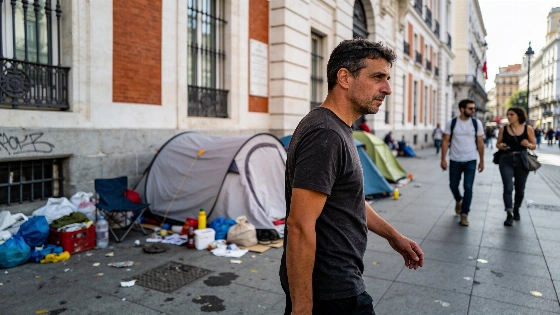
The Juzgado de lo Contencioso-Administrativo nº14 has stepped aside in the legal fight over the Puerta del Sol protest, saying it cannot rule on the Ayuso government’s urgent push to clear the square. That blocks any immediate police action. The case now goes to the Tribunal Superior de Justicia de Madrid (TSJM), Sixth Section.
Activists continue to occupy basic Madrid, demanding real change on housing, as city officials wait for the higher court to decide. The Ayuso administration sought emergency orders to compel the Delegación del Gobierno to break up the camp. The lower court’s refusal leaves the situation unresolved. Reuters and AFP report that the protest began after 87-year-old Maricarmen Abascal was evicted from her longtime home. The movement grew quickly, drawing attention to Spain’s worsening housing crisis. Reuters reported that around 30,000 people marched in Madrid at the height of the demonstrations, while AP and AFP noted that hundreds of tents were set up and about a thousand protesters remained in the camp.
The TSJM’s Sixth Section has made mistakes before. Earlier this year, the same chamber wrongly froze work at Valle de Cuelgamuros after judges believed the site was protected as a Bien de Interés Cultural. It was not. The error stalled government plans for weeks, showing how court decisions can derail political plans.
Madrid’s housing crisis continues to spill into the streets and the courts. As previously reported, political deadlock over eviction rules has fueled public anger, leaving many vulnerable residents in limbo. The Sol standoff is the latest clash between regional leaders and grassroots groups. Euronews and NPR have linked the protest to rising rents and a shortage of affordable homes, amid outrage over the treatment of elderly tenants.
The lower court has stepped aside, leaving the TSJM to decide the fate of the Sol camp. Its ruling could also set a new standard for how Madrid handles protests and urgent government requests. The tribunal’s past missteps should make both sides cautious. In Madrid, legal details can freeze or speed up political change, and the TSJM’s ruling will test the court’s clarity and the government’s resolve. AFP reports that Prime Minister Pedro Sánchez has promised "swift" action on housing. Protesters are staying put and want to keep up the pressure. Reuters reported that by the end of September and early October, similar encampments and rallies had spread to other Spanish cities, where activists demanded faster parliamentary approval of new housing measures.