Madrid's foster care programs now offer more teens a chance to join families. Temporary placements during the school year or summer can change their future. Demand is rising as more adolescents seek these opportunities.
Madrid is seeing a shift in its foster care landscape as more families step forward to host teenagers from state-run residences, offering them a rare chance at family life and educational stability. The regional government, through programs like Un curso en familia and Vacaciones en familia, is connecting older minors—often overlooked in traditional foster care—with households willing to provide temporary but transformative support.
For Evan Careng, now 20, the impact was immediate. Four years ago, he was struggling academically in a Madrid care center, facing the prospect of moving to a transitional apartment at 18 and putting his studies on hold to work. That changed when Irene Llabrés and Javier Serrano, parents of five, decided to join the Un curso en familia initiative. Despite not actively seeking to foster, they were drawn in by friends’ experiences and the flexibility of temporary care. Their decision allowed Evan to finish school, pursue a university degree in Advertising and Public Relations, and plan for an Erasmus year in Prague.
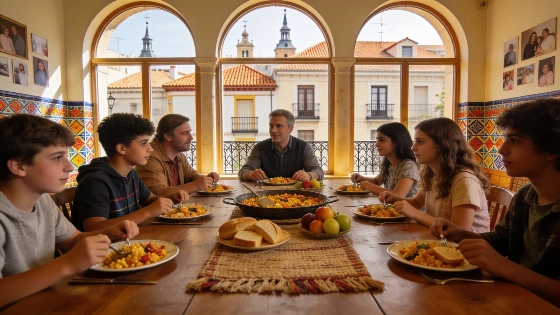
The process is carefully managed. Social workers match families and minors based on needs and preferences, often starting with weekend visits before moving to longer stays. For Evan, the transition was challenging—leaving his younger sister behind in the residence and adapting to a new household dynamic. Over time, he integrated, participating in family events and daily routines. The program’s structure requires minors to return to their residence during summer, but some families, like Irene and Javier’s, extend the arrangement by joining the Vacaciones en familia program, which covers holiday periods for children aged seven to 17.
Adriana de la Osa, president of ASEAF and a foster parent herself, highlights the unique value of temporary foster care. Unlike adoption or permanent placements, these programs allow both families and minors to commit for a defined period, reducing pressure and making the experience more accessible. She notes that many adolescents hesitate to leave their familiar environment, fearing loss of connections or the challenge of starting over. Yet, when given the option, they often find the experience rewarding and life-changing.
Madrid’s approach is notable for its focus on older children and those with specific needs, such as disabilities or chronic illnesses, who typically have fewer opportunities for family placement. Since 2020, Un curso en familia has matched 107 minors with families, while Vacaciones en familia has enabled 509 children to spend summer holidays with 485 households over the past five years. According to Silvia Valmaña, director general of Infancia for the Community of Madrid, most families who participate once choose to repeat or transition to longer-term arrangements, though some are limited by changing circumstances or holiday plans.
Interest among minors is growing, driven in part by word of mouth from peers who have benefited from the programs. For many, the chance to invite friends home, eat when hungry rather than on a set schedule, and continue their education is a significant improvement over institutional life. The experience, however, is not without its difficulties. Adolescents like Evan describe the initial fear of not fitting in or being sent back, but also recognize the new possibilities that come with family support.
Madrid’s foster care initiatives reflect a broader trend in Spain toward more flexible, needs-based solutions for minors in state care. The region’s programs are designed to bridge the gap between institutional living and permanent family placement, offering practical pathways for education and personal development. This approach complements other social measures in Spain, such as the recent pension credits for parents, which were detailed in a related report on new Social Security benefits for families.
As the number of children in state care remains high—1,858 in Madrid alone, according to the Ministry of Youth and Childhood—the success of these temporary foster programs may influence future policy. The focus on older minors and those with complex needs addresses a longstanding gap in the system, while giving families a structured, time-limited way to make a difference. For many participants, the experience is not just about providing shelter, but about opening doors to education, stability, and a sense of belonging that can shape a young person’s future.