Madrid’s city council has appealed a court order halting the Montecarmelo industrial site. Residents call the move a disregard for justice and question the project’s rising costs. The dispute highlights ongoing tensions over urban planning and public spending.
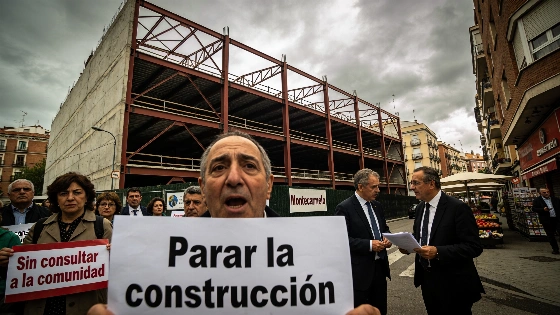
The conflict between Madrid’s city council and Montecarmelo residents has intensified after the municipality formally appealed a court order that stopped construction on the controversial industrial site. The council’s legal team argues that suspending the works will cost the city more than €450,000 each month, a figure residents say is exaggerated and unjustified. The appeal has reignited accusations that the city is ignoring both judicial decisions and community concerns.
The legal dispute centers on a judge’s decision in May to halt the Montecarmelo project, siding with the Asociación de Afectados por el Cantón. The court cited the lack of an urban planning license, absence of an environmental impact study, and risks to children at nearby schools as grounds for the suspension. The judge warned that allowing construction to continue could waste public funds if the project is later ruled unlawful. Despite this, the city council insists that the financial burden of stopping the works is even greater, claiming the contract has already been fully paid—over €2.5 million—and that monthly losses now exceed €450,000 plus VAT.
Residents, represented by the Plataforma No Al Cantón, have dismissed the city’s cost estimates as inflated. They point out that the project is already three years behind schedule, and argue that the supposed monthly losses would have amounted to €15 million over that period. The council’s justification for prepaying the contract—citing the urgent need for the facility—has only fueled further skepticism among locals, who see the move as an attempt to push through a project that lacks proper oversight and community support.
Adding to the controversy, the city’s appeal downplays the significance of political statements made by officials such as Mayor José Luis Martínez Almeida and Urban Planning Delegate Borja Carabante. Both had previously suggested the project would be modified to reduce its industrial character and minimize its impact on the neighborhood. However, the appeal argues that such statements are irrelevant to the legal process and should be treated as political debate, not binding commitments. Residents note that no official changes to the project have been made, and the site retains its industrial features—an issue that led the court to declare the project invalid due to the missing environmental assessment.
The city council maintains that the Montecarmelo facility is essential for municipal services and must be located on the current plot, rejecting proposals to move it further from residential areas and schools. This stance has deepened the divide with residents, who stress they do not oppose improved working conditions for municipal employees but object to an industrial site being built just 60 meters from a school. The dispute has also seen the council attempt to frame the conflict as a clash between residents and workers, a narrative locals firmly reject.
According to the Asociación de Afectados, the legal process surrounding the city’s appeal could take several months, meaning construction will remain on hold for now. However, residents remain frustrated by what they see as the city’s refusal to reconsider its approach, citing contractual obligations as the main reason for pressing ahead. The situation in Montecarmelo echoes broader tensions in Spain over urban development, public spending, and the balance between municipal priorities and neighborhood interests. Similar disputes have surfaced in other Spanish cities, as highlighted in recent coverage of political standoffs and legal battles, such as the ongoing debate over leadership and governance in Catalonia (see analysis of Catalan demands and PSOE leadership challenges).
For context, Spanish administrative law requires environmental impact assessments for major urban projects, especially those near sensitive sites like schools. The Montecarmelo case underscores the growing scrutiny of public contracts and the importance of transparent urban planning. As the legal process unfolds, the outcome may set a precedent for how similar disputes are handled in Madrid and beyond.