Christian González Aceña, an agricultural engineer, refused a €700,000 offer for his organic farm in Bustarviejo—over 18 times what he paid. His decision highlights the value he places on biodiversity, sustainable farming, and passing on a living legacy to his family.
When Christian González Aceña was offered €700,000 for his organic farm in Bustarviejo, north of Madrid, he didn’t hesitate to say no. The 46-year-old agricultural engineer had purchased the land for just €38,000 more than a decade ago. Despite the offer being over 18 times his original investment, González Aceña chose to keep the property, determined to continue his work conserving rare crop varieties and building a future for his family.
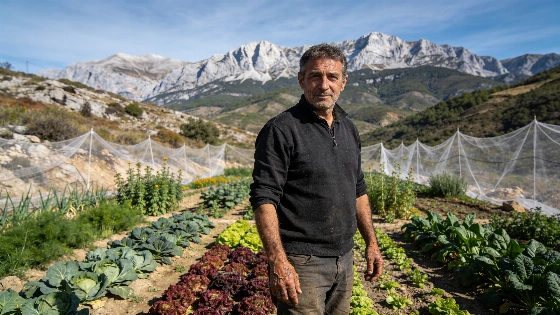
His farm, perched at over 1,200 meters above sea level in the Sierra Norte, is anything but typical. The challenging climate—marked by cold nights, hailstorms, and persistent pests—makes large-scale production difficult. Yet, it’s precisely these conditions that have shaped his approach: focusing on organic methods, seed preservation, and direct relationships with consumers and chefs.
González Aceña’s project, named La Huerta de Abril after his eldest daughter, has grown into a reference point for organic agriculture in the region. The farm supplies more than 210 varieties of vegetables and herbs, all grown without agrochemicals, and maintains a seed bank of over 3,000 plant varieties. Some of his produce, including gourmet tomatoes and rare berries, has reached the kitchens of Michelin-starred restaurants in Madrid, such as Pabú, where the connection between field and fine dining is celebrated.
His story gained wider attention through a documentary by Goly, where he explains the philosophy behind his refusal to sell. “What I do is to leave a legacy for my family and for humanity,” he says, emphasizing the importance of keeping traditional farming alive and ensuring that rare seeds are not lost to industrial agriculture. The figures he cites—both the purchase price and the offer—are based on his own account, as no public documentation has been found to independently verify them.
The farm’s altitude brings both advantages and risks. Cooler nights can slow ripening and influence the flavor and nutritional profile of crops, though scientific studies suggest these effects vary by species and growing conditions. Research on high-altitude vineyards, for example, shows that altitude can alter plant development and composition, but also introduces new stresses, such as increased UV radiation and reduced photosynthesis. For González Aceña, the unique environment is both a challenge and a source of distinction for his produce.
Extreme weather remains a constant threat. In the past six years, two severe hailstorms devastated the farm’s harvests, forcing González Aceña to launch a crowdfunding campaign to install protective netting and safeguard his seed collection. He also notes that rising temperatures have extended the growing season but brought new pests, like red spider mites, previously unseen in the area. Maintaining organic practices means relying on crop diversity and ecological balance rather than chemical interventions.
Beyond supplying restaurants, the farm operates as a market, school, and visitor experience, selling directly to families, local shops, and organized consumer groups. During periods when mountain weather limits production, González Aceña collaborates with other organic growers to maintain a steady supply. His approach reflects a broader trend in Spain, where traditional crops and direct farm-to-table connections are gaining renewed interest, as seen in initiatives like the tomato-focused gastronomic routes in Málaga.
Support for organic agriculture is also growing at the policy level, with programs such as the Common Agricultural Policy (CAP) offering incentives for sustainable practices, though the specifics vary by region. For many small producers, these supports are crucial for weathering the risks of climate and market volatility.
González Aceña’s decision to reject a lucrative offer in favor of stewardship and continuity stands out in a country where land values and urban pressure often push farmers to sell. His story echoes the experience of skilled workers in other sectors who find new opportunities by holding onto their expertise and values—much like the Argentine bricklayer who quickly found work in Spain, as reported in this recent article.
For now, the fields of Bustarviejo remain in the hands of a farmer committed to biodiversity, resilience, and the quiet work of growing food that tells a story—one that, for González Aceña, is worth far more than any offer.