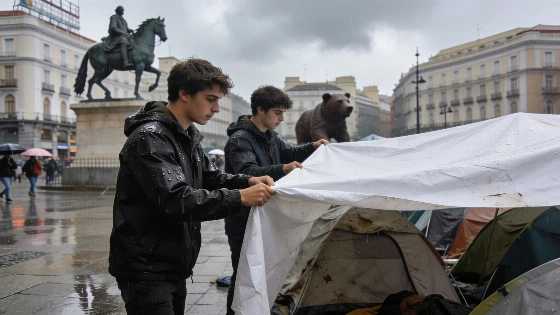
More than 200 tents remain in Madrid's Puerta del Sol. Renters and pensioners are keeping the camp going as clashes with media figures test the protest.
More than 200 tents remain in Madrid's Puerta del Sol. Rain swept across the square as clashes broke out around the housing protest. Renters facing crushing monthly payments joined supporters who came from across Spain. The camp's sharpest test came when several media agitators entered the area.
Bertrand Ndongo of Periodista Digital sparked the first major confrontation. Protesters surrounded him and shouted "¡Fuera fascistas de nuestros barrios!" They pushed together to force him out. The dispute became chaotic. Pepper spray was used.
Протестующие намерены удерживать лагерь до вторника, когда правительство Испании должно обсудить новые жилищные меры. Их цель — добиться от кабинета декрета о жилье.
About an hour later, YouTuber Borja Escalona faced a similar scene. He stopped his social-media broadcasts. Protesters escorted him away from the square as insults and competing shouts filled the area.
Vito Quiles was confronted later. Protesters shouted "No pasarán". Policía Municipal and his bodyguards accompanied him out of Puerta del Sol. Several protesters then clashed with his team on calle del Carmen. The camera operator's equipment fell to the ground.
The incidents showed how tense the camp had become. They did not displace its main demand. AFP and other outlets gave different figures for the number of tents, from roughly 150 to 350. About 600 people were still taking part on Monday.
Banco de España оценивал дефицит жилья примерно в 550 000 домов в прошлом году. При этом социальное арендное жильё занимает менее 2% жилищного фонда Испании против 8% в среднем по Европейскому союзу.
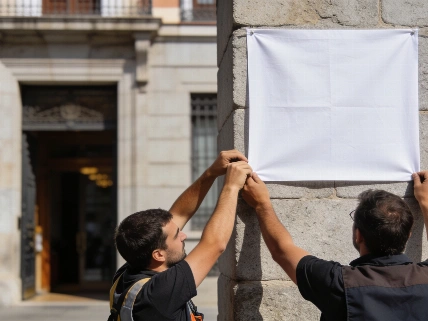
Rain forced organisers and occupants to add more white tarpaulins and awnings. The camp spread beyond the stone benches. It narrowed the route used by passers-by. Demonstrators sang "Que no nos echen de nuestros barrios". Open-microphone sessions and information assemblies gave different groups time to present their proposals.
Some supporters did not sleep in the tents. Violeta Torres came from Alto de Extremadura with a pink umbrella and words of support for the younger occupants. Rent has taken more than half of her income for five years. She rejected the idea that the crisis belongs to one age group or family model. "Las personas tenemos derecho a una vivienda digna; ni jóvenes, ni viejos, ni familias. Personas".
That message reached beyond the tents.
África Azaceta and her circle said the camp had turned private frustration into collective action. They said one income was not enough to rent alone. Dependence on parents had pushed them to seek a public symbol that could carry the issue beyond complaint. Neighbours, pensioners and passers-by brought coffee and pastries to people who spent the night under the tarpaulins.
The housing dispute had already reached Parliament, as an earlier housing report showed. In Sol, the political argument now has tents, assemblies and a daily presence in the street. Protesters and the Tenants' Union are also calling for rent freezes, stronger tenant protections, action against fraud and a ban on evictions without alternative accommodation.
Antonia Calvo and Antonio Hernández travelled from Sevilla la Nueva. Their physical condition meant they could not camp. The 70-year-old couple said they had joined the 15 May 2011 movement. They returned to Madrid to support younger generations. Antonia said the visitors had come to provoke the protest. The couple also described their support as a defence of their own future.
Violeta Torres made a similar point. She said eight years of government had not stopped many people from being left behind. She rejected the idea that the problem could be reduced to the case of Maricarmen. The 87-year-old's eviction from her Madrid home helped turn her case into a symbol of the wider housing crisis.
Rent pressure also shows up in Madrid's rental figures. CNN cited Idealista when reporting that average rents rose from 12.8 euros per square metre in August 2016 to 23.3 euros per square metre in August 2026. The increase nearly doubled over the decade.
Congress is deciding whether to act on housing while the camp remains at Spain's kilometre zero. Sol has become a public test of how far rent pressure can push residents into sustained collective action. Individual images may focus on the provocations. The larger fact is simpler. Rain and hostility have not emptied the square.
AP reported that families from several generations had joined the encampment. A Tenants' Union spokesperson said protesters would stay "as long as necessary". For now, the camp's clearest message is also its most concrete one. Housing has moved from a private household struggle to a permanent demand in central Madrid.