Hundreds have pitched tents in Madrid’s Puerta del Sol, demanding real answers to Spain’s housing emergency. The government faces growing pressure as activists warn that failing to pass the 'decreto Maricarmen' could spark a political crisis.
Madrid’s Puerta del Sol looks different this week. Tents fill the square. Protesters refuse to leave. The housing crisis is now front and center. The government faces a crucial vote on Tuesday. Activists say the stakes are high. If leaders stall, the fallout could be severe—and not just for those sleeping outside.
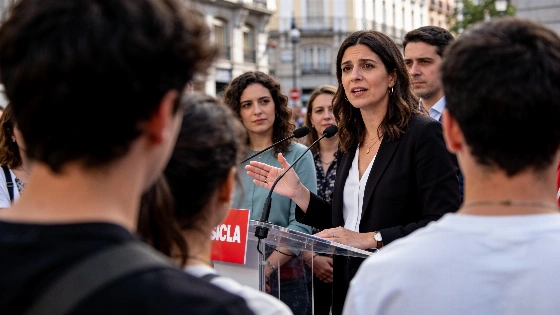
Valeria Racu, who speaks for the Sindicato de Inquilinas, stands in the middle of the camp. Her message is blunt. The government cannot ignore the anger that exploded after Maricarmen’s violent eviction. That case drew condemnation from the UN, which called it illegal. Racu says, "We are not going to accept being told nothing can be done." She blames politicians from all parties for letting speculation and rent-seeking shape housing rules.
According to Euronews, after Saturday's demonstration, around 150 tents remained in Puerta del Sol, coordinated by the Sindicato de Inquilinas.
Photos of Maricarmen’s eviction set off the protest. Racu calls it a turning point. The demonstration grew fast. Sol overflowed. Protesters decided to stay. "This cannot end here," became the rallying cry. Outrage turned into a demand for real change.
The 'decreto Maricarmen' is now at the center. Activists see it as the bare minimum. Racu says passing it is just the start. "It cannot be the end. It must be the beginning of a radical change in how housing is understood in this country." The camp will stay at least until Tuesday. But Racu says the timeline depends on the people, not politicians.
If the government fails to act, Racu expects things to escalate. "It will not come cheap. The conflict will continue to grow, and a very large political crisis will open up." She sees cracks already forming inside the government. More inaction could make those splits worse. Old scare tactics—"better this than what might come," or "if you don’t vote for us, the wolf will come"—no longer work. "The wolf is already here: we are being thrown out of our homes, and the police are sent after us for defending the right to housing."
According to ARA, the Saturday march in Madrid drew 25,000 people according to the government delegation, while organizers claimed 300,000 participants, highlighting the scale of public mobilization. The political risk is heightened by the fact that the government lacks a stable majority to pass the housing package, and coalition partner Sumar has threatened to leave the cabinet if the decree is not advanced.
This protest draws comparisons to the 15-M movement. Racu sees key differences. Both started with anger and hope in the streets. But this camp is focused on housing. It was sparked by a single eviction. The demands are specific. The slogan "Todas somos Maricarmen" rings out. Racu says eviction now threatens people of all ages and backgrounds. Not just the elderly. Not just the poor.
Spain’s housing crisis has changed. Fifteen years ago, people fought to buy homes. Now, many cannot even rent. Racu describes a system where buying means "a tenant of the bank for 30 years." Renting offers no safety. She says the rules were written for profit. Governments have gone along.
For many young people at Sol, this is their first protest. Racu sees relief and new confidence. "When we come together and organize, we can have more power than any politician, landlord, judge, or police officer." The movement runs on anger and hope. New faces want to see how far they can go.
Racu does not hold back on the politics. She blames right-wing parties for opening Spain to investment funds in 2013. She points to Ana Botella’s sale of public housing to Blackstone and Mariano Rajoy’s reforms that favored speculation. But she also faults the current progressive government for keeping the same system. "This is no longer about political parties; that framework is obsolete. We need real change for a problem that cuts across ideologies, ages, and social classes."
The Sol protest is not alone. As reported earlier, Maricarmen’s eviction has already shaken Spain’s political scene. The square has become a symbol of national frustration over housing.
The government’s next move is under the spotlight. Protesters in Sol are clear: empty gestures and slogans are not enough. They want action now. That starts with passing the 'decreto Maricarmen', but it cannot stop there. The government faces a hard choice. Fix the crisis or risk a political rupture. Sol is now a test. The outcome will show if Spain’s leaders are ready to face a housing system that, for many, has already failed.