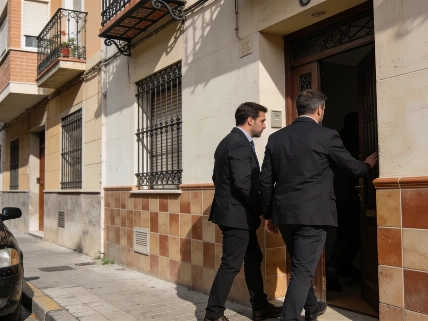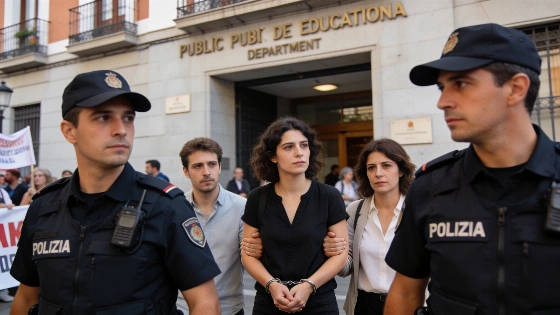
Students and teachers brought Madrid’s Gran Vía to a halt while chanting against underfunding of public education. A secondary-school teacher was arrested at midday outside the Consejería de Educación de la Comunidad de Madrid. Calle Alcalá was also cut to traffic during the gathering, which drew educators and staff from across early-years, non-university and university settings. The Policía Municipal de Madrid said the arrest was for alleged disobedience and resistance to authority. EFE reported that the teacher was taken to the Leganitos police station, where hundreds of demonstrators later gathered in support.
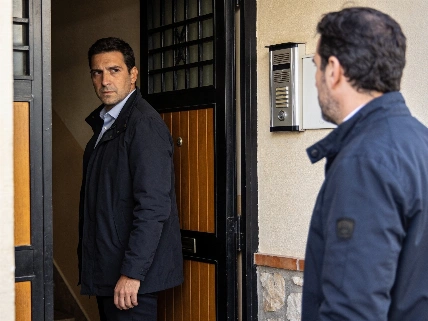
The circumstances are disputed. Claudia Saralegui, spokesperson for protest organiser Menos Lectivas, said plain-clothes officers had provoked and pushed the teacher before he responded with gestures and asked to be left alone. Saralegui described the arrest as violent and alleged that an undercover officer among the teachers had provoked the teacher.
José Muñoz, a secondary-school Physics and Chemistry teacher who witnessed the arrest, described an earlier confrontation. He said an officer had asked the teacher to move away from Cedaceros street and pushed him after he refused. Muñoz said another person in plain clothes then approached the teacher and later signalled other officers using a microphone and earpiece. His account differs from the organisers’ description of how the encounter began.
The arrest took place amid an indefinite strike by pre-university teachers that began on 14 October 2026 after months of negotiations. The European Trade Union Committee for Education said unions were seeking stronger public provision, along with better working conditions and increased staffing and resources. The coalition includes CCOO, CGT, CNT, Solidaridad Obrera, STEM and UGT, alongside groups such as Educación Especial Digna, Menos Lectivas and Queremos FP. An earlier sit-in report covered teachers seeking direct talks at the regional education headquarters.
The teaching-load demands include reducing weekly classroom hours for secondary, vocational and special-regime teachers from 19 to 17, and for early-years and primary teachers from 25 to 22. On the morning of 5 November, nine public-education teachers reportedly occupied the education department’s human-resources headquarters while seeking a meeting with regional education councillor Mercedes Zarzalejo.
Hundreds of education workers attended the gathering, including staff from early-years and primary education as well as secondary schools and universities. The protest also coincided with the second day of a two-day strike by Madrid’s six public universities, called by the Coordinadora en Defensa de la Universidad Pública over funding and staffing shortages, along with a lack of resources. University campaigners cited investment of 0.4% of regional GDP and called for it to rise to 1%. The day began with information pickets at schools and was due to continue with a march in the afternoon.