Teachers spent Wednesday night at Jarama school in Rivas-Vaciamadrid during their sixth day of indefinite strike action. They want the regional education department to open talks; the government says it will not start new negotiations.
By 8pm on Wednesday, teachers were arriving at Jarama school in Rivas-Vaciamadrid carrying sleeping bags. They stayed overnight during the sixth day of an indefinite strike, which began on 14 October, to press the regional education department to open a negotiating table. The walkout is backed by unions CCOO, UGT, CGT, CNT, Solidaridad Obrera and STEM, along with the platforms Educación Especial Digna, Menos Lectivas and Queremos FP.
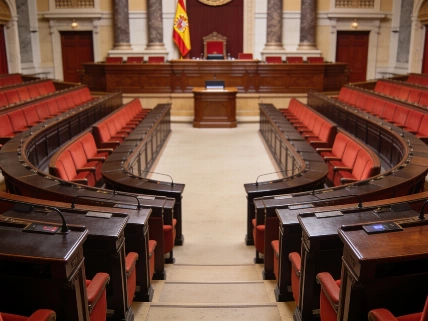
The sit-in is set to end on Thursday morning. Teachers then plan to go to the Assembly of Madrid for a rally during the weekly plenary session. A separate march is scheduled for 6pm, from Atocha to the Education Department on Calle Alcalá.
The Comunidad de Madrid says it will not open new negotiations with the strike committee. Education Minister Mercedes Zarzalejo has said the government will continue with its programme and focus on maintaining minimum services, reporting any aggression and protecting pupils’ right to education alongside teachers’ right to work. Regional government spokesman Miguel Ángel García has called the strike political and said the government has met its commitments. El País reported that 20 organisations had sent the regional education department a letter on 24 August setting out six key demands and seeking talks before the strike began. By 21 October, the administration was declining to create a separate negotiating table for the striking groups, while saying discussions on other matters continued.
The dispute centres on pay and working conditions. The strike committee is seeking a monthly salary increase of 600 euros and pay levels in line with those in other Spanish autonomous communities. The regional administration says the 600-euro measure would cost 655 million euros a year. The committee also wants smaller classes, fewer teaching hours and more resources for pupils with special needs, as well as a special-education allowance. The requested class limits are 13 in early childhood education, 15 in primary school, 20 in secondary school, 23 in Bachillerato and 15 in vocational training. The regional government has offered pay rises of up to 350 euros a month through a horizontal professional-career model. Payments would be linked to criteria or changes in working-time arrangements. The unions consider the offer insufficient and say it does not replace negotiations on the wider package of demands.
After six days, teachers’ unions put strike participation at 50%, while the Consejería de Educación reports 10.2%. On the first day, 14 October, the unions estimated support at 70%; the regional government put it at 44.6% of staff in public schools. On the second day, union representatives put participation at about 60%, while the administration reported 26.7%.
Wednesday’s sit-in followed demonstrations in Leganés and Alcalá de Henares, plus a gathering at the Reina Sofía museum. At the Leganés march, teachers, pupils and families walked between Universidad Carlos III and Plaza de España. In Alcalá de Henares, protesters staged a symbolic funeral procession for public education. On 16 October, hundreds of teachers also gathered outside the regional education department to demand talks with Zarzalejo. On 19 October, a planned appearance by the minister at a vocational education centre was cancelled after protesters arrived calling for negotiations.
Other recent education coverage has examined international links, including a Spanish-Chilean university agreement.
The strike committee includes CCOO, UGT, CGT, CNT, Solidaridad Obrera and STEM, as well as the platforms Educación Especial Digna, Menos Lectivas and Queremos FP. CSIF is running a separate campaign of partial strikes during the school year, scheduled for 20, 22, 26 and 30 October, and has called for the sectoral negotiating committee to meet. Its demands include a capital-city pay supplement, fewer administrative tasks and recognition of coordination and tutoring duties as teaching hours.
The regional administration is also negotiating a separate horizontal professional-career model with unions ANPE, CCOO, UGT and CSIF. The proposed structure has six professional levels. Meetings on the model took place on 22 September and 1 October, followed by a third sectoral-commission meeting on 16 October. The next week of protests is already scheduled. Organisers have set a rally on Calle Alcalá for 26 October, information assemblies on the 27th and demonstrations in Leganés and Villalba on the 28th. A march from Atocha to the Education Department is planned for 29 October, followed by a general assembly at Plaza de España on the 30th.