Madrid accounted for 32,999 used-car sales in September 2026, or 17.9% of Spain’s total. A vehicle’s environmental label can also determine where its buyer may drive in the capital.
Sales in the province rose 34.6% year on year, while the national figure fell 0.6%. Madrid led the Spanish ranking. Barcelona recorded 15,416 transactions, followed by Alicante with 9,389. From January to September, the province recorded 252,556 sales, 13.5% more than in the same period of 2025. According to GANVAM, vehicle distribution in Spain generates activity equivalent to 7% of national GDP and supports nearly 390,000 jobs.
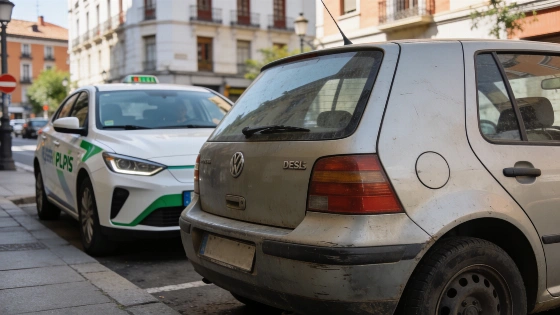
Those sales figures sit alongside an ageing national fleet of used cars. Vehicles sold in Spain averaged 11.4 years old, and 41.6% were more than 15 years old. GANVAM has separately reported that vehicles over 15 years old account for about 40% of used-car transactions. Diesel made up 48.1% of second-hand sales. For buyers considering an older car, its environmental classification is a practical check.
New-car registrations offer a contrasting picture of the market’s electrification. GANVAM reported 98,487 new passenger-car registrations in October 2026, up 1.8% from October 2025, and said sales had exceeded one million in the first ten months of the year. Nearly 32% of October registrations were plug-in models. Electrified vehicles of all types rose 40.2% year on year to 34,664. Average CO₂ emissions from passenger cars sold during the year fell below 100 grams per kilometre for the first time.
The rules vary by area. Cars with B or C labels can circulate in Madrid’s low-emission zone and in Plaza Elíptica. They face restrictions on entering Distrito Centro unless they meet one of the exceptions in the municipal rules, including access to a public car park or certain cases involving residents or economic activity.
Vehicles with ECO or CERO labels have wider access across the three zones. Since 1 January 2025, cars without a label have been subject to a general city-wide circulation ban, with exceptions and a transitional regime for some vehicles registered in Madrid. CERO vehicles also receive additional SER parking benefits under the conditions set out in municipal regulations.
A car’s label depends on its engine type and registration date, so two cars of the same model may not qualify for the same category. In general, B covers petrol cars registered from 2001 and diesels from 2006; C covers petrol cars from 2006 and diesels from September 2015. ECO includes, among others, non-plug-in hybrids. CERO covers fully electric cars and plug-in vehicles with at least 40 kilometres of electric range.
Spain’s used-car market is far larger than its new-car market: Autonoción reports 1.8 used cars sold for every new vehicle. A separate regional pattern appears in this Murcia import report, which says imported used vehicles made up 33.9% of registrations there in 2025.
Before buying, motorists can use the DGT’s official online service to check a registration number and confirm the vehicle’s environmental classification.