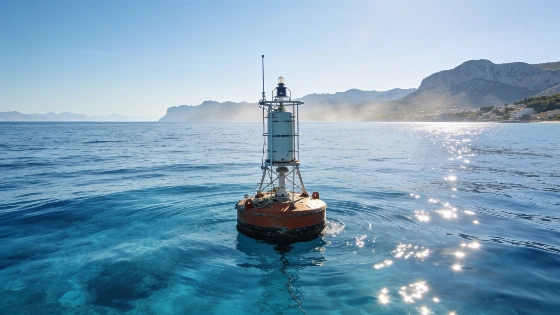
A buoy in Mallorca registered a record 32.1°C in July 2026, highlighting the scale of marine heatwaves impacting nearly the entire Mediterranean. Scientists warn of mounting stress on marine ecosystems and reduced nighttime relief along the coast.
In July 2026, a buoy anchored in the Bay of Pollença, Mallorca, measured a striking 32.1°C at the water’s surface—a local record that underscores the extraordinary heat gripping the Mediterranean this year. While this figure reflects a specific coastal hotspot, not the average for the entire sea, it signals how far temperatures have climbed in certain areas.
According to Copernicus Marine, the average surface temperature across the Mediterranean between January and June reached 18.07°C, making it the third warmest first half of the year on record, surpassed only by 2024 and 2025. This period coincided with widespread marine heatwaves, which, as Copernicus reports, affected 98% of the Mediterranean basin. Nearly 80% of the sea endured strong, severe, or even extreme heatwave conditions, with impacts stretching from the open sea to the coastline.
Local Extremes and Broader Trends
The 32.1°C reading in Pollença is a snapshot from a single point, influenced by factors like sensor depth, time of day, wind, and water circulation. Coastal waters often heat up more than the open sea, and such extremes should not be confused with the broader satellite-derived averages. Still, the record illustrates the intensity of this summer’s heat, with some comparing the sensation to Caribbean waters—though the overall Mediterranean remains cooler on average.
Signs of unusual warming appeared even before summer peaked. In May, Spain’s Puertos del Estado reported monthly records at most of its buoys, with Mahón reaching 26.58°C and Dragonera 26.2°C. These early spikes suggest the sea was already accumulating heat well ahead of the main tourist season, driving interest in the cooler northern beaches.
Satellite Data and Anomalies
Satellite observations have confirmed the scale of the anomaly. On June 29, 2026, the European Space Agency (ESA) detected surface temperature deviations of up to 8°C above the 1991–2020 average, especially off southern France, around Corsica and Sardinia, and near the Italian peninsula. These anomalies reflect how far current conditions stray from historical norms, not the absolute water temperature.
Impact on Coastlines and Nighttime Relief
While a hot Mediterranean does not automatically trigger atmospheric heatwaves, it does have a direct effect on coastal living. Warm water at night increases humidity and makes it harder for temperatures to drop, reducing the cooling effect usually provided by the sea. As a result, coastal residents may experience more stifling nights and less relief during periods of extreme heat, especially when winds are light.
June’s climate summary from Copernicus Climate Change Service highlighted this convergence: the global average air temperature reached 16.54°C, the second warmest June on record and 1.39°C above pre-industrial levels. Meanwhile, the average sea surface temperature outside the polar regions hit a record 20.86°C, pointing to a sustained accumulation of heat in 2026.
Marine Ecosystems Under Pressure
Prolonged marine heatwaves are putting unprecedented stress on Mediterranean ecosystems. The MedECC scientific network has documented mass die-offs among corals, sponges, mollusks, and other coastal species, often linked to both heat and pathogen outbreaks. Shifts in species distribution and the arrival of non-native tropical organisms have also been observed. The frequency of these events leaves less time for habitats to recover, raising concerns about long-term resilience.
UNEP/MAP, the United Nations’ Mediterranean program, notes that the region is warming 20% faster than the global average. MedECC projects that, under very high emissions, Mediterranean sea surface temperatures could rise by 2.7 to 3.8°C by 2100, while an intermediate scenario would see increases between 1.1 and 2.1°C. For regional air temperatures, the projected rise could approach 5.5°C under the worst-case scenario.
As the Mediterranean continues to heat up, the consequences are becoming harder to ignore—from altered marine life to uncomfortable nights along the coast. The data from Mallorca’s buoy is just one signal in a sea of evidence pointing to a rapidly changing climate in the region.