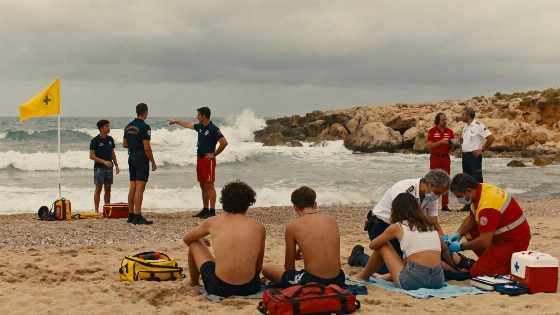
A 47-year-old man drowned at Prat d’En Forés-Regueral beach in Cambrils after swimming at night without lifeguard supervision. Emergency teams responded but could not revive him. This marks the tenth beach drowning in Catalonia this season.
A 47-year-old man lost his life late Friday night while swimming at Prat d’En Forés-Regueral beach in Cambrils, Tarragona. The incident occurred around 22:15, after lifeguard services had ended for the day. According to the Generalitat’s Civil Protection, the man, of Senegalese origin, suffered a cardiorespiratory arrest while in the water. Despite the rapid arrival of four ambulances from the Emergency Medical System (SEM), medical teams were unable to resuscitate him.
Authorities reported that the emergency call was made to 112, prompting immediate deployment of rescue and medical personnel. However, all attempts at resuscitation failed, and the man was pronounced dead at the scene. The lack of lifeguard presence at that hour was a critical factor, as no professional supervision was available to intervene during the emergency.
Throughout Friday, yellow and red flags were raised along Costa Daurada beaches, warning of hazardous sea conditions. These warnings, issued due to rough waters, signaled increased risk for swimmers. The tragedy in Cambrils highlights the dangers of entering the sea outside supervised hours, especially when adverse weather or sea conditions are present.
With this latest incident, the number of drowning deaths on Catalan beaches since the start of the bathing season on June 15 has reached ten. The frequency of such accidents has drawn attention to ongoing safety concerns along Spain’s coastline. Similar risks have been noted in other recent incidents, such as when a tourist died after falling from a towed inflatable and being struck by a yacht off Xàbia, as detailed in this report on a fatal yacht accident near La Caleta.
Spain’s coastal authorities regularly emphasize the importance of adhering to lifeguard schedules and respecting flag warnings. The bathing season, which typically runs from mid-June to September, sees millions of residents and tourists flock to the beaches. Lifeguard services are generally available during daylight hours, but outside these times, swimmers are at significantly higher risk. The combination of unsupervised swimming and challenging sea conditions remains a leading cause of fatal incidents each summer. As the season continues, officials urge beachgoers to prioritize safety and avoid entering the water when lifeguards are not present or when warning flags are displayed.