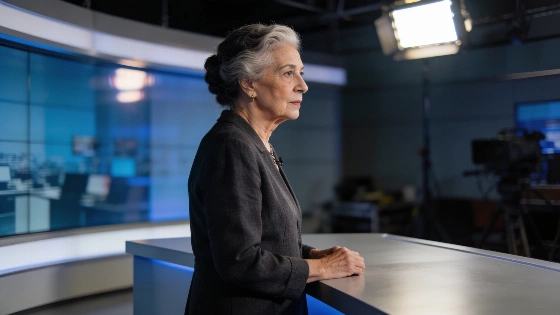
After 29 years away, Mari Carmen García Vela returned to Informe Semanal for a one-off edition marking TVE’s 70th anniversary and the programmes that shaped Spanish television.
On 10 October 2026, the familiar desk at Informe Semanal was used for a one-off anniversary broadcast. Mari Carmen García Vela returned to the programme 29 years after leaving it, as La 1, Canal 24 Horas and RTVE Play carried the special.
The edition was built around TVE’s 70th anniversary and García Vela’s place in the programme’s history. Her return gave the broadcast a clear human focus as it examined how Spanish television has changed.
The special aired before 28 October, when TVE will formally mark seven decades since regular broadcasts began in 1956. García Vela presented Informe Semanal for twelve years, giving her a direct connection with its record of covering Spain’s social and political transformation, along with major cultural shifts. According to RTVE, the programme has been on air for 53 years and remains one of the defining long-running formats in Spanish public television.
García Vela entered television at 19 after winning the Caras Nuevas contest. Born in Madrid in 1942, she became one of TVE’s most recognisable on-screen figures.
Her first words to viewers had the feel of a reunion.
García Vela acknowledged that facing the cameras again in the familiar studio had made her uneasy beforehand. She also made clear that the format still holds a strong professional and personal place in her life. In an RTVE interview, she described her years at Informe Semanal as an “addiction” and her departure as a kind of “withdrawal syndrome”, underlining the emotional weight of the return.
The central report, titled 70 años viéndonos, followed television from its pioneering black-and-white years into today’s complex broadcasting environment. Archive footage and testimonies from people connected to the medium drove the 16-minute-and-one-second piece. It also revisited programmes that entered the collective imagination and paid tribute to the early professionals who built the country’s audiovisual television industry.
In the anniversary edition, García Vela argued that television can still offer a conversation with a name and a face, preserving a human dimension in an environment shaped by social networks and artificial intelligence. For her, journalistic credibility is also visible when a journalist clearly understands the subject and explains it with confidence.
Several contributions supplied the report’s human and historical weight. Mari Cruz Soriano discussed the first generation of television workers and their cultural influence on successive audiences. Alejandro Ibáñez recalled his father Chicho Ibáñez Serrador and the creative mark he left on formats that defined an era.
Jordi Hurtado brought a lighter perspective, reflecting on how viewers perceive the passage of time. Nicolás Albéndiz, who heads the TVE museum at the broadcaster’s production centre in Sant Cugat, displayed technical equipment that showed the chain’s shift from early television technology to its current infrastructure.
Behind the presenters and celebrated formats was another story: the technicians and production staff who kept the service operating across seven decades.
The anniversary edition also recognised that work. Its historical account rests on the people behind the cameras as much as on the figures who appeared before them.
The programme included a second report, “Las elecciones de Maricarmen”, about the social and political consequences of the eviction of Mari Carmen Abascal and her subsequent death. Alongside “70 años viéndonos”, it gave the special a contemporary public-affairs focus as well as its account of television history.
The edition fits a wider television-focused cultural agenda that recently included Gonzalo Suárez’s return to the small screen. García Vela’s case was more direct: she revisited the programme with which she remains professionally identified.
That choice gave Informe Semanal a strong anniversary structure. Personal memory ran alongside institutional history, while technological change was tied to the people who worked through it and the audiences who watched. The broadcast is available on demand through RTVE Play with subtitles.