Maricarmen Abascal died in Madrid on 7 October after spending 15 days in hospital following her eviction. Her case has sparked protests and fresh political pressure over Spain's housing crisis.
At Gregorio Marañón hospital in Madrid, Maricarmen Abascal died on 7 October 2026 after 15 days of treatment. She was 87. Doctors admitted her after officers removed her from the home where she had lived for around 71 years on 23 September.
The Sindicato de Inquilinas announced her death, and EFE reported the same information. One local report gives her age as 88, but the main independent accounts identify her as 87.
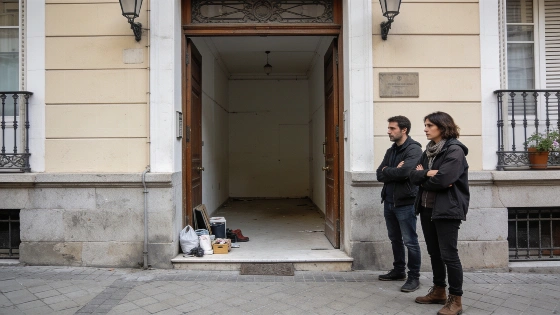
The eviction took place at a flat on Alcalde Sainz de Baranda street in Madrid's Retiro district. Dozens of activists gathered outside while officers carried Abascal from the property on a stretcher after the court-ordered removal. RTVE reported that she had lived there since she was 17.
Abascal received a pension of approximately 1,400 euros and used it to pay her rent, according to RTVE.
That pension covered the rent, according to RTVE.
The case quickly moved beyond one apartment. Demonstrators gathered outside Congress and in Puerta del Sol, where they blamed speculation and rent-seeking for the housing crisis. They also called for the campaign for access to housing to continue.
Her death has made Abascal a symbol of nationwide protests over the right to housing. It has also put renewed attention on elderly tenants who still live under older rental arrangements.
Madrid Government delegate Francisco Martín said Abascal's death should not leave anyone unmoved. He said it should prompt a closer look at Spain's social conditions. UGT secretary general Pepe Álvarez tied the case to what he called the cruelty of a system that left her without a home. He urged people to take to the streets in tribute to Abascal and others denied housing.
The eviction followed a long legal dispute over a so-called old-rent contract, or renta antigua, and later transfers of tenancy rights. A local report said the final enforcement of the court decision took place on the fourth attempt.
The dispute centred on a so-called old-rent contract, or renta antigua, and later transfers of tenancy rights. Gacetín Madrid reported that officers finally enforced the court decision on the fourth attempt.
Health Minister Mónica García said Abascal's struggle had awakened consciences across Spain. Irene Montero called the death a murder and thanked Abascal for her fight. Their statements put the eviction at the centre of a broader argument over housing and the duties of public institutions.
The Sindicato de Inquilinas urged tenants to keep defending housing rights. Its statement treated the case as more than a dispute over one property and called for continued pressure against Spain's housing model.
Abascal had a reported 50% disability. After officers forced her out, they took her to hospital in serious condition. Reports also said that an agreement could have allowed her to return to the apartment. She first had to leave the hospital, but she died before that happened.
The case has also produced calls for a general strike and early elections. Details of those demands and the electoral process were not provided.
What is known is specific. An 87-year-old woman who had lived for 71 years in the same Retiro home was removed after dozens of activists protested outside. She died in hospital before she could return. Politicians, trade unions and housing groups have since responded publicly to the eviction and its human cost.
The address, the court-ordered removal and the image of Abascal being carried out on a stretcher have kept the case at the centre of Spain's housing debate.