María del Carmen Abascal died after years defending her rented home in Madrid. Her case sparked protests, encampments and a government response on housing.
On 7 October 2026, María del Carmen Abascal died at 87 after spending about two weeks in hospital. She had been evicted from the Madrid home where she lived for 71 years on 23 September.
Known as Maricarmen, she was taken to hospital after the eviction from the Retiro district. An agreement later gave her the right to return, but she died before leaving hospital. Her health and emotional state had worsened sharply by then.
She won back the right to go home, but not the chance to die there.
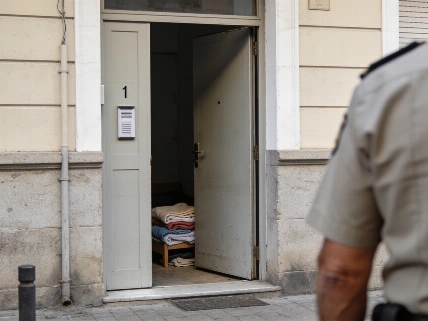
The eviction on 23 September took place only after the enforcement of the decision had been postponed and attempted four times.
The Sindicato de Inquilinas confirmed her death in a statement signed by her family and lawyer Beatriz Duró. The group said Madrid City Council had helped mediate an agreement with the fund Urbagestión. It called the deal historic, but said it came too late to undo the damage caused by the eviction.
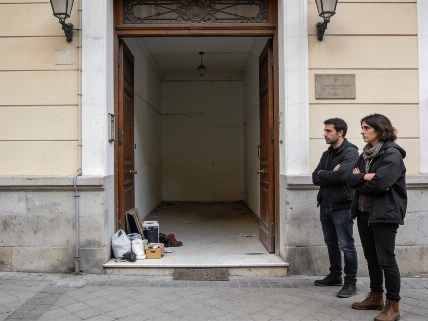
Maricarmen's belongings are still inside the flat on Alcalde Sainz de Baranda. She left with only the clothes she was wearing. EFE reported that her family and the union saw the decline in her health after the eviction as central to the case's public significance.
The dispute began with a rent-controlled contract signed by her father seven decades ago and later transferred to her mother. Urbagestión bought the building, treated the contract as ended and sought a new tenancy agreement. Maricarmen could not afford the proposed rent.
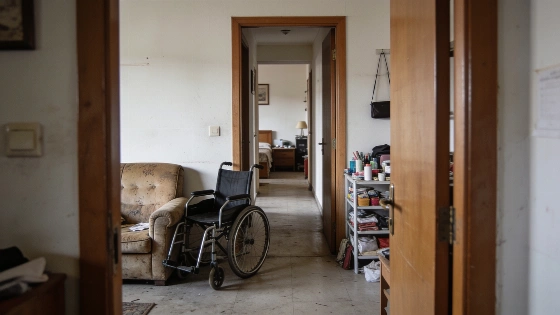
She spent almost seven years in court trying to stay in her home while living with a 50% disability. In her final years, she could move only in a wheelchair and needed help with daily tasks. During the last months, she lost muscle mass, struggled to eat and said her voice had changed. She had remained in hospital since the eviction.
On 28–29 September, representatives of Maricarmen and Urbagestión reached an agreement that would have allowed her to return to the flat after leaving hospital. The arrangement was never implemented because she died before she could be discharged.
The fight soon moved beyond one address.
Protests followed the eviction, including an encampment at Madrid's Puerta del Sol. Demonstrations also took place in other Spanish cities. The mobilisation was followed by a government response that put two housing decrees before Congress. Both were later rejected.
The Sindicato de Inquilinas links those events to the wider protest movement. Independent reporting confirms the sequence but does not show that Maricarmen's case alone caused the legislative decisions. In a joint statement, the union, her family and Beatriz Duró also linked the wider campaign to mass demonstrations, an early election and the call for a general strike.
They described the developments as a turning point in Spain's history, while saying the price had been too high. Earlier reporting on public events in Spain has also shown how disputes in one place can draw attention far beyond their immediate setting.
Maricarmen did not present herself only as a victim.
During the first days of the encampments, she urged protesters to keep fighting for their homes. She thanked the people and children who came to support her, the Sindicato de Inquilinas e Inquilinos and Beatriz Duró, who had spent many hours on the case. She also called on campaigners to keep opposing the funds she blamed for the housing crisis.
Her message was direct: losing her own home could warn others who were trying to protect theirs. Alicia del Río of the Sindicato de Inquilinas said Maricarmen's struggle leaves a political legacy. She added that speculation and rental income kill people every day. The organisation also called for respect for her family.
The agreement secured a return only after an elderly tenant with a disability had been removed from the home that defined her life. After her death, the arrangement lost its practical purpose, and the apartment on Alcalde Sainz de Baranda returned to Urbagestión's control.
The legal status of the old contract and the property's future use remain separate unresolved questions. Maricarmen's final appeal was simple: keep fighting for what belongs to you. Her death leaves the agreement measured against what it could not deliver.