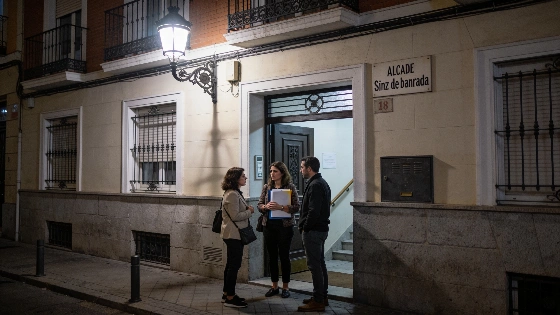
After days of tension and a hospital stay, 87-year-old Maricarmen will not be evicted from her Alcalde Sainz de Baranda apartment. A four-hour meeting between Madrid’s housing agency and Urbagestión ended with a deal that lets her stay—a rare moment of unity in the city’s housing fights.
Word reached Maricarmen late at night. She was in her hospital bed when she learned she could stay in her home. The news came after more than four hours of tense talks between the Empresa Municipal de Vivienda y Suelo (EMVS) and Urbagestión, the company that owns her apartment on Alcalde Sainz de Baranda. The meeting took place behind closed doors at EMVS headquarters. For Maricarmen, it meant she would not lose the flat she has lived in for decades. That almost never happens in Madrid’s tough rental market.
Inside the meeting, Urbagestión’s team faced Maricarmen’s lawyer, her cousin Vicente, and city housing officials. The mood was tense. Outside, reporters and cameras crowded the entrance. This case had become a symbol for tenant rights in Madrid. When the deal was announced, cheers broke out in the EMVS corridors and at the Sol encampment, where supporters waited for news.
Maricarmen had lived in the Alcalde Sainz de Baranda apartment since 1956, with the original rental contract signed by her father, making her occupancy one of the longest in the area.
The exact terms of the deal have not been made public. Still, everyone left the table satisfied. No one walked away defeated. That almost never happens in Madrid’s housing disputes. The urgency was real. Maricarmen had just been evicted and was in Gregorio Marañón hospital, waiting for updates as others decided her future.
This case put a spotlight on how Madrid handles housing disputes. The EMVS had offered to mediate after Urbagestión tried to use the ReViVa program, which is meant for empty homes. That option hit two roadblocks. First, the apartment still had a mortgage. Second, ReViVa rules do not allow a landlord to pick a specific tenant for a property entering the program. Instead, the Service of Active Intermediation (SIA) became the path forward. SIA now covers 715 properties across Madrid’s metro area. Under SIA, tenants cannot be charged more than 40% of their yearly income for rent. Landlords can choose from a list of eligible tenants, but only if the property meets minimum size rules.
For Maricarmen, the legal details mattered less than the result. Her legal team and the Sindicato de Inquilinas made it clear: this fight was about more than one apartment. The union said, "We will keep up the pressure to put housing at the center." They want indefinite contracts and real stability to stop more cases like this. Their focus is not just on Spain. They look to Germany and the UK for ideas.
According to several Spanish media reports, the Ayuntamiento de Madrid rejected Urbagestión’s proposal as 'inviable' because the apartment did not meet the requirements of the ReViVa program or other municipal housing purchase schemes. Instead, the city convened a formal mediation session on September 28 at 16:00, bringing together representatives from both sides to negotiate with the EMVS’s rental mediation service.
Housing insecurity is a daily fact for many in Madrid. As reported earlier, Urbagestión’s handling of Maricarmen’s eviction drew public anger and scrutiny. This agreement brings relief for one tenant. It does not fix the bigger problems facing renters in the city.
What makes this case different is simple. Tenant, landlord, and city officials all agreed—at least for now. The celebrations in Sol and the relief in Maricarmen’s hospital room were real. But the details are still hidden, and activists say the fight is not over. Madrid’s housing battles continue. This deal shows that public pressure and city action can break a deadlock. The deeper problems, though, are still there.