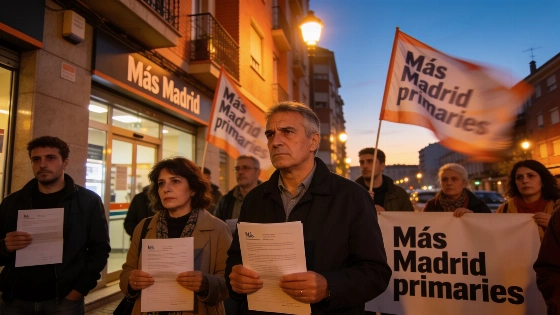
A group of Más Madrid members in Alcorcón has taken legal action to suspend the party's primaries. They allege a sudden doubling of affiliates and irregularities in the electoral roll. The dispute could affect candidate selection for 2027.
The upcoming Más Madrid primaries in Alcorcón have been thrown into uncertainty after a group of party members filed a court request to suspend the internal vote, citing alleged fraud in the electoral census. The legal complaint, submitted just days before the primaries, points to an abrupt registration of around 70 new affiliates—twice the number previously on record in the local assembly. This spike, the plaintiffs argue, raises serious doubts about the integrity of the process to select candidates for both the 2027 municipal and Madrid regional elections.
According to the court documents, the influx of new members occurred immediately before the start of the primary process. The complainants claim that the number of people involved with the Alcorcón branch over the past five years is far lower than the recent surge in registrations. They suggest that the timing and scale of these new sign-ups are unlikely to be coincidental, alleging a coordinated effort to manipulate the electoral roll in favor of certain interests within the party. However, the complaint does not specify which individuals or groups might benefit from the expanded census.
Two main candidates are competing in the primaries: Manuel San Pastor, a lawyer and activist, and Trinidad Castillo, the current spokesperson and deputy mayor. The plaintiffs allege that the sudden growth in membership could unfairly influence the outcome, especially as the party's statutes require participants to have registered before March 18 and to have taken part in at least three recognized activities annually. The complaint further accuses the local party of hastily organizing events in recent months—such as an online video editing workshop and a housing discussion—without proper approval from the Alcorcón Territorial Assembly. These activities, they argue, were designed to artificially meet the participation requirement for the new affiliates.
Concerns are also raised about the lack of reliable attendance records for these events. The responsibility for verifying participation falls to the party's spokespersons, Diego de Segovia and Sara Pérez. The legal filing includes statements from both, confirming that they did not verify the attendance of the new members at the cited activities. This, according to the plaintiffs, undermines the credibility of the process and the legitimacy of the expanded electoral roll.
Before turning to the courts, the group had already attempted to challenge the situation internally. On May 21, they filed an appeal with the party's oversight bodies, warning of alleged fraud and irregular event convocations. The Más Madrid Guarantees Committee rejected the appeal, citing insufficient signatures—fewer than the required 50 militants. A second attempt in June, this time with the necessary support, was also dismissed. The ongoing dispute in Alcorcón echoes broader tensions seen in other parties' primary processes, such as the recent internal conflicts within PSOE over early candidacies in Madrid, as reported in coverage of PSOE's primary race launch.
Internal disputes over party primaries are not uncommon in Spain, especially as local and regional elections approach. Party statutes often set strict requirements for participation, but sudden changes in membership rolls can trigger suspicion and legal challenges. The outcome of the Alcorcón case could set a precedent for how parties handle internal disputes and safeguard the integrity of their candidate selection processes ahead of the 2027 elections.