PSOE's federal committee has triggered a wave of early candidacies for 2027. The move has sparked internal conflict in Madrid, with Enma López's announcement drawing criticism. Key figures in Valencia and La Rioja also step forward.
The PSOE's federal committee has set the stage for the party's local and regional primaries ahead of the 2027 elections, igniting a surge of early candidacies and exposing internal divisions, particularly in Madrid. The newly approved primary calendar, offering three possible windows in July, September, or November, has prompted several prominent party members to declare their intentions, sometimes ahead of official timelines.
Enma López, a Madrid city councillor, publicly announced her bid to lead the PSOE list for the Madrid City Council, challenging former minister Reyes Maroto. López's early move, revealed in EL PAÍS two days before the committee meeting, drew sharp criticism from both the federal leadership and the Madrid party executive, who accused her of disregarding internal procedures. The situation escalated when López resigned from her position in the federal executive to focus on her campaign, a decision that party headquarters viewed as premature and potentially misleading regarding support from Pedro Sánchez and the Madrid PSOE.
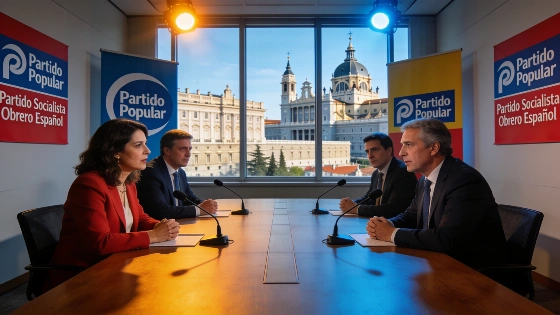
During the six-hour committee session, the controversy surrounding López was notably absent from official discussions. Meanwhile, Reyes Maroto, accompanied by Madrid federation secretary general Óscar López, prepared to face the city's current mayor, José Luis Martínez-Almeida, in the upcoming state of the city debate. Óscar López, also Minister for Digital Transformation, avoided commenting on the internal dispute, emphasizing instead the party's commitment to government continuity.
Elsewhere, the primary process has encouraged other regional leaders to step forward. Diana Morant, Minister and secretary general in the Valencian Community, used her closed-door speech to announce her candidacy for the presidency of the Generalitat. Morant highlighted her ambition to become the first female president in the region's history and called for party unity in the upcoming campaign. In La Rioja, regional secretary general Javier García also formalized his intention to run, pointing to the significance of the 2027 elections for both the region and the party's future there.
In the Balearic Islands, a leadership transition is underway. Francina Armengol, president of the Congress and long-time secretary general of the PSOE in the region, confirmed last week that she will not seek re-election. Rosario Sánchez, Secretary of State for Tourism, has emerged as the leading candidate to succeed her and has already launched her campaign for the presidency of the regional government. Sánchez has criticized the current administration's policies on housing, tourism, and public services, positioning herself as a defender of the region's social diversity.
The PSOE's decision to open the primary process early reflects a broader trend among Spanish parties to prepare well in advance for major electoral contests. The party last held the Madrid mayoralty in 1989, underscoring the significance of the current internal competition. The upcoming primaries are expected to shape the party's strategy and leadership across several key regions, with implications for both local governance and national politics. In Spain, primary elections within major parties have become increasingly important for candidate selection and internal legitimacy, often serving as a barometer for broader political trends ahead of general elections.