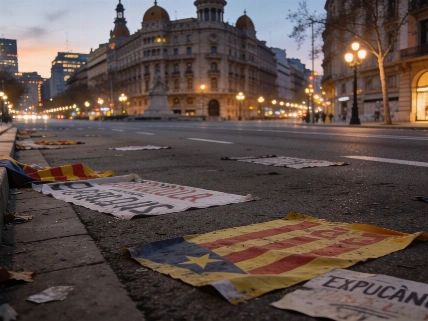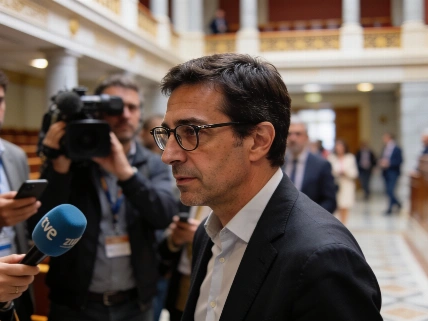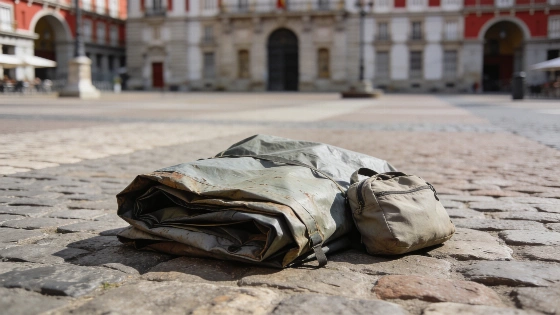
Police entered the Puerta del Sol camp at 2.55, according to Aster, one of the people who had been staying there. She told a Friday press conference that officers cut through the tarpaulins and tents with knives. The account is an allegation by a camp representative. The operation took place in the early hours of 3 November, after the encampment had stood for 37 days, since 26 September.
Aster said there had been no advance warning. The two hours cited by the Government Delegation in Madrid referred to the time taken to complete the clearance, she said, rather than a period given to leave. She also said a protocol for people with reduced mobility could not be carried out. The delegation described the eviction as a last resort after a gradual process, citing the continued presence of the installations despite prior communications. It also cited reported disturbances and a specific danger to people and property.
The representatives said the speed of the operation left people without personal belongings and medication. Juanlu reported that a diabetic campmate had gone several days without treatment. Eda said one person was in Hospital Doce de Octubre with a chest injury. The Government Delegation said 334 people were removed during the clearance and two were arrested.
Juanlu said officers took his mobile phone and held him for two hours. He also alleged that they insulted him with political and homophobic abuse. He showed a medical report recording facial irritation from pepper spray. Aster said she had a medical report documenting lumbar injuries. The Madrid representative’s office said the two arrests were for alleged disobedience and resistance to officers; authorities described the operation as taking place without incident or episodes of violence.
The allegations were made as Acampada 26S described its priorities following the eviction of the encampment, which began on 26 September. The protest followed the eviction of Maricarmen Abascal, an 87-year-old Madrid resident who had lived in her home for more than 70 years. RTVE reported that she was admitted to hospital because of her fragile health and died two weeks later at Hospital Gregorio Marañón. The movement had issued a manifesto on 2 November and had been preparing further events and measures, Juanlu said. Those plans have been put on hold while the group helps people who had been sleeping in the square.
Eda said the immediate priority was supporting people without homes, including by paying for hostel stays with shared funds. Francisco José, one of those affected, said the right to assemble had not been respected and called on public authorities to comply with Article 47 of the Spanish Constitution. He said that right had been recognised during the first weeks of the mobilisation.
The camp representatives also disputed the reported cost of cleaning and preparing the square. Juanlu argued that allowing people time to leave would have reduced the expense, and said the money could instead have gone towards housing or public services. The group said people without homes had lost the daily belongings they had left. According to the Government Delegation, 220 National Police officers and 180 Madrid Municipal Police officers took part. Firefighters and social services were also involved. Madrid city sources said the intervention restored normality in the square.
A separate RUSSPAIN.COM report covered the Tarragona unit closure, a distinct development involving Spain’s Civil Guard.