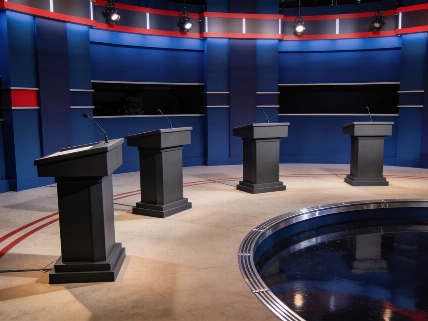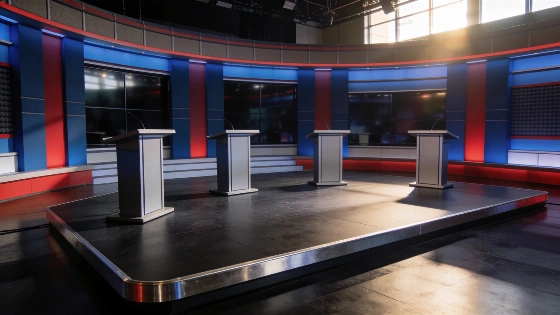
Preparing for a four-way televised debate cut back Ada Colau’s public appearances during the final week of the campaign. Her performance then gave Frente Amplio a lift after weeks in which the coalition had struggled to gain attention.
Most analysts saw Colau’s performance as strong. She appeared alongside Pedro Sánchez, and the source account said her presence seemed to help him recover some of the firmness he had lacked in his televised encounter with Alberto Núñez Feijóo the week before.
The campaign had started with Frente Amplio seeking more than 10% of the vote. Polls cited in the source placed it at around 7%, although published estimates varied: the CIS study released on 23 November put the coalition at 5.7%, while a separate Demócrata poll gave it 3.9% and Euronews’s roundup of polling scenarios put it between 5.8% and 6.6%, depending on how regional alliances were grouped. The CIS survey also recorded Pedro Sánchez as the preferred prime minister among 42.4% of 5,992 respondents, compared with 23.3% for Feijóo, 13.2% for Santiago Abascal and 5% for Colau. Reuters reported that a 40dB survey for El País, based on 7,500 interviews, projected the PP at 31.8% and 127-136 seats, the PSOE at 30.9% and 116-127 seats, and Vox at 17.3% and 51-61 seats. The polling figures were pre-election estimates, not certified results. Media attention focused on Abascal’s appearance on La Revuelta and the exchange between Sánchez and Feijóo. The coalition’s programme included a proposed 100% levy on inheritances above €10 million and an annual wealth tax on the ultra-rich, but its policies had not set the campaign agenda.
That challenge followed a troubled launch after Frente Amplio failed to reach agreement with Podemos and faced internal disputes over candidate lists. In an interview with EL PAÍS, Colau said her side had offered the maximum possible generosity during negotiations. In a separate interview published by Ara on 24 November, she described the coalition as an effort to unite 15 political formations and said Podemos had been invited but had not agreed to sit down and negotiate, instead pursuing a different agreement. The coalition also had to establish a new name, its third in seven years after Unidas Podemos and Sumar; Comuns acknowledged that a new brand could cost it support.
Colau had left the front line of politics after departing Barcelona’s city council in 2024, and Frente Amplio chose to build her profile across Spain rather than rely on frequent appearances in Barcelona. She attended only one event in the Catalan capital. In Catalonia, Urtasun took a more constructive tone, while Emilio Delgado in Madrid appealed to the campaign’s more working-class electorate. An earlier account of the final debate’s strategy, including Colau’s planned challenge to the PP leader, appears in this debate briefing.
Frente Amplio also argued that the PSOE could not secure another term in government on its own, countering calls for tactical voting for the Socialists. In her Ara interview, Colau said she was concerned that Esquerra Republicana de Catalunya might regard the election as already lost, and framed the contest as a choice over whether a PP-Vox government could be prevented. A campaign video used dogs to portray government partners defending Sánchez from animals representing the PP and Vox.
A political analyst close to the coalition said the debate helped contain movement towards the PSOE, particularly in larger constituencies where seats are more proportional. The analyst credited Colau with standing firm against the right and challenging Feijóo with data. The debate also brought gender-based violence into the discussion and prompted a dispute between Feijóo and Colau over her response during the dana.
Frente Amplio’s scheduled final Madrid rally was at La Nave in Villaverde, with Colau, Madrid candidate Emilio Delgado, Izquierda Unida’s Toni Valero and Movimiento Sumar co-leader Verónica Martínez Barbero on the programme. Ministers Pablo Bustinduy and Mónica García were due to attend, as were Ernest Urtasun and Yolanda Díaz; performers included Zahara and Samantha Hudson, along with Elio Toffana. The event was planned ahead of the 29 November general election.