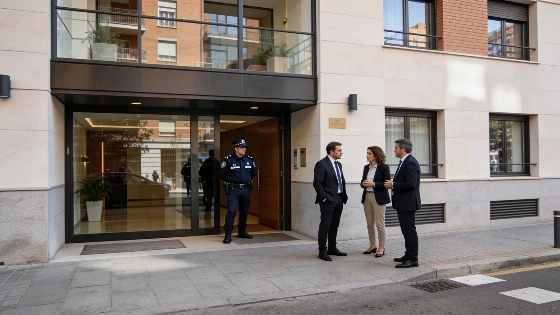
Más Madrid accuses the regional government of breaching public interest in a secretive €6.3 million penthouse acquisition. The case now moves to court, raising questions about transparency and use of public funds.
The political conflict surrounding the purchase of a €6.3 million penthouse by the Comunidad de Madrid has escalated, as Más Madrid formally entered the legal proceedings as a popular prosecution. The opposition party alleges that the regional government, led by Isabel Díaz Ayuso, acted against the public interest and may have committed criminal offenses in the acquisition of the luxury property. The intended use of the penthouse remains unclear, fueling further controversy.
Más Madrid’s legal filing, submitted to the court handling the case, argues that the operation could constitute administrative misconduct, embezzlement, fraud, and disloyal management of public assets. The party points to the opaque manner in which the purchase was conducted: the transaction was neither announced by the public company Planifica Madrid nor by the regional government itself, and details only emerged after media exposure. The penthouse, located at 35 General Martínez Campos, was reportedly intended as a temporary office for Ayuso during renovations, though no official information about such works was available at the time.
The case, now under investigation by Madrid’s Court of Instruction No. 8, originated from complaints filed by PSOE, Iustitia Europea, and private individuals. Más Madrid’s move follows similar legal steps by PSOE, which also submitted its own accusation based on earlier complaints. Ayuso has repeatedly denied that the penthouse was intended as her official residence, but legal experts note that current regulations prohibit its use for either residential or office purposes by the president.
Despite repeated requests, the government has so far refused to release the full documentation of the purchase, including the file that should have been opened by Planifica Madrid. Ayuso has stated that the responsibility for clarifying the matter lies with the regional presidency minister, Miguel Ángel García Martín. Meanwhile, Manuela Bergerot, Más Madrid’s spokesperson in the Assembly, has publicly demanded the publication of all documents related to the transaction and insists that Ayuso bears direct responsibility for the decision.
The secrecy surrounding the deal has intensified suspicions. According to the complaint, although the purchase was formalized before a notary and all taxes and fees were paid, the process allegedly bypassed the legally required procedures for public acquisitions. This, Más Madrid claims, demonstrates a conscious disregard for legal obligations in the use of public funds.
In an attempt to defuse the scandal, Ayuso has put the penthouse up for sale. However, the controversy continues to dominate the political agenda as the new legislative session begins. The government faces mounting pressure to disclose how and why this particular property was selected, and Planifica Madrid may be compelled to release further details under transparency laws.
For context, recent scrutiny of public sector hiring and procurement in Spain has also drawn attention, as seen in the Valencian Antifraude Agency’s investigation into recruitment practices. These cases highlight ongoing concerns about transparency and accountability in regional administrations.
The outcome of the penthouse case could have significant implications for public trust in Madrid’s institutions. The legal process is expected to clarify whether the acquisition breached administrative or criminal law, and whether further reforms are needed to prevent similar controversies in the future. The situation underscores the importance of transparency in public spending, especially when large sums and high-profile officials are involved.