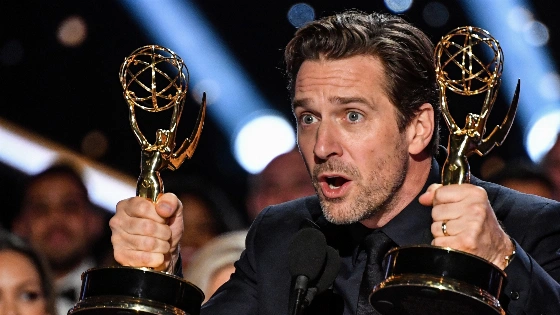
Matthew Rhys did something no one else had managed in nearly eight decades of Emmy history: he won two lead acting awards for different shows on the same night. First, he took home outstanding lead actor in a comedy for Widow’s Bay. Minutes later, he returned to the stage for outstanding lead actor in a limited series for The Beast in Me. The room’s surprise was obvious.
Widow’s Bay, Apple TV’s dark comedy, benefited from Rhys’s wins and dominated the night, taking home 14 awards from 19 nominations. The show won best comedy series. Kate O’Flynn and Stephen Root took supporting acting awards, while Katie Dippold’s writing and Hiro Murai’s direction earned top prizes. Its sweep ranked among the largest in recent Emmy memory, information from the BBC and industry recaps, and made clear which series defined the year.
Jean Smart added her own chapter to Emmy history. With her fifth straight win for outstanding lead actress in a comedy for Hacks, she became the first woman to win an Emmy for every season of a show. Her eighth acting Emmy ties her with Alison Janney for the most acting wins ever. Julia Louis-Dreyfus and Cloris Leachman share the record as well. Janney also picked up another award, winning supporting actress for The Diplomat. Ceremony reports and Television Academy records confirm Smart’s basic stage for women in television.
Not every favorite had a big night. The Pitt, which led in nominations, ended up with six wins, including outstanding drama series and a lead actor award for Noah Wyle. Wyle’s back-to-back wins in the drama category mark the first repeat since Bryan Cranston’s Breaking Bad run. In his speech, Wyle talked about growing up in Los Angeles and his long-standing dream of joining TV’s top ranks.
In the limited series categories, DTF St Louis took home seven awards, including best series and supporting wins for David Harbour and Linda Cardellini. Rhea Seehorn finally won her first Emmy, taking best lead actress in a drama for Pluribus. Tom Pelphrey won best supporting actor for Task.
Stephen Colbert’s last season of The Late Show won in the variety show category after the show’s controversial cancellation. Colbert used his speech to thank the more than 200 staffers who had worked on the show over the years, urging the industry to hire them: “Hire them. They will make your day better and your lives easier.”
Political speeches were rare this year, but Vince Gilligan made a pointed comment while accepting best writing in a drama for Pluribus. He described his show as set in a world “in which everybody gets along, that’s so sci-fi. But think about it: there’s nothing weirder than our current reality.” He called for more respect and less division. The Pitt’s creator, R Scott Gemmill, echoed that message as he spoke about the need for honest storytelling in a time of blurred truths.
Several high-profile nominees left empty-handed. Shrinking and A Knight of the Seven Kingdoms were among them, as were Beef and Margo’s Got Money Troubles. Abbott Elementary and Paradise also missed out. Their absence from the winner’s list showed how the night’s victories clustered around a few standout titles.
Rhys’s achievement stands out for its rarity and its reach across acting categories. His previous wins cover drama and comedy, with limited series completing the sweep. He now holds a unique triple crown among male performers. He seemed stunned by the moment: “I am slightly giddy and a little bit dizzy,” he said, crediting his Welsh background and the teams behind both shows.