The Pazo de Meirás became state property in 2020 after a court ruling, but that did not bring every object inside the estate into public ownership. Spain’s Supreme Court unanimously upheld the ruling in March 2026 while recognizing the heirs’ right to compensation. The family of Martínez-Bordiú and Franco is now offering 689 lots from its private holdings at a Madrid auction. Starting prices run from €20 to €5,000, and the lots have a combined starting value of €207,700.
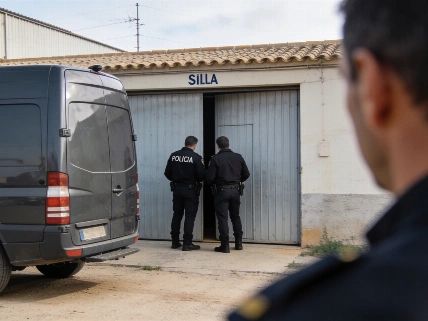
The objects were removed from the estate in July 2026 under the supervision of the State Attorney’s Office and grouped into 689 lots, some containing multiple items. El País reported that the removal involved nearly 700 lots and approximately half a dozen moving trucks. The auction catalogue brings together close to 1,000 individual objects.
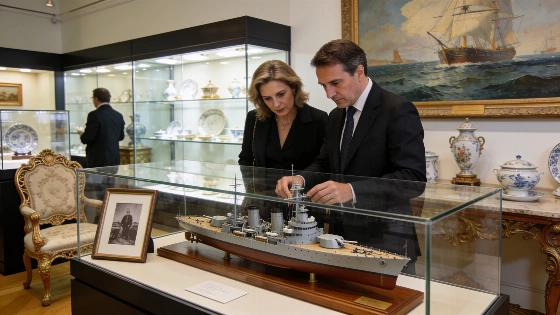
The catalogue covers furniture and historic tableware, alongside paintings and religious ornaments. Its highest opening price is €5,000 for an oil painting titled ‘San Francisco orante ante el crucifijo junto a la calavera’, attributed to the circle of Luis Tristán (1585-1624). The next price tier is €4,500. It includes a 17th-century walnut bargueño and two paintings: ‘Madre mirando con sus hijos que dan de comer al gallo’ by Gaetano Chierici (1838-1920) and ‘Amanecer rosado’ by Benito Quinquela (1890-1977).
Other high-priced pieces include a pair of Carlos III consoles and a Louis XVI bureau, each listed at a minimum of €3,750, as well as a silver sculpture at €3,000. Eight firearms from Morocco, dated in the catalogue to the 14th and 20th centuries, have a starting price of €2,500. The catalogue also features everyday household goods, alongside photographs and political memorabilia.
Several lots relate directly to Francisco Franco and his family. A photograph of Franco with Carmen Polo and their daughter Carmen starts at €80; a military portrait is listed at €300. A 1975 photomontage showing Franco at Plaza de Oriente with his wife and the then-prince and princess Juan Carlos and Sofía starts at €500.
A framed photograph of Juan Carlos carries a handwritten dedication to Franco and has a starting price of €200. Household lots include tables and chairs, as well as crockery, cutlery and glassware. They also include linen sheets, some embroidered with symbols linked to Franco. Other catalogue items include religious objects and textiles.
Magna Art Auctions director José Miguel Carrillo de Albornoz called the sale historically significant because of the house and family associated with the objects. He said the auction was supervised by the State Attorney’s Office and the Xunta de Galicia. The auction is being held at the firm’s premises at Calle Núñez de Balboa 15 in Madrid, with sessions scheduled for 5pm on 27 and 28 October. The first session covers lots 1 through 689. Bidders can attend or place bids by telephone and in writing; the sessions will also be streamed live.
The Ministry of Culture told Europa Press that the lots are items the State has not claimed. The Commission for the Recovery of Historical Memory of A Coruña has asked the State and Xunta to check whether any objects belong to the public domain or fall under another legal protection regime. The distinction is between ownership of the estate itself and ownership of its movable contents. The question concerns ownership and heritage protection; a separate consumer enforcement case over holiday listings in Israeli settlements is covered in this earlier report.
A Coruña mayor Inés Rey has criticised the family over the sale. Xunta culture minister José López Campos said regional officials would remain alert to any item of interest that technicians might recommend acquiring.
The estate’s history helps explain the scrutiny. Emilia Pardo Bazán began building the property in the late 19th century. After her death in 1921, her heirs struggled with its upkeep. In 1938, local and provincial authorities joined businesspeople in organising its acquisition for the head of state; donations fell short, so compulsory subscriptions were used to cover the cost. The family of Pardo Bazán could not retrieve her belongings after the sale.
Franco’s family retained the Pazo after his death in 1975. The Xunta approved its designation as a Bien de Interés Cultural in 2008, and the Supreme Court upheld the decision before the site opened to visitors in 2011. Following Carmen Franco’s death in 2018, her heirs put the estate on the market. The central government brought a court action in 2019, and the courts ruled in 2020 that the property belonged to the State.