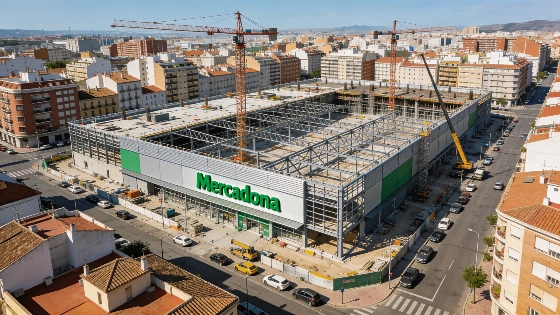
On Avenida Ramón y Cajal in Dos Hermanas, the steel frame and signature panels of Mercadona’s newest supermarket are now unmistakable. Construction crews are turning a 5,700-square-meter plot into a two-story retail hub that will soon exceed 11,000 square meters of built space, making it the municipality’s second-largest supermarket after Carrefour.
The project replaces Mercadona’s former store on the ground floor of Edificio San José, which closed after years of service because of outdated accessibility and space limitations. The new location, just 300 meters away, lets the company introduce its latest “Tienda eficiente” model, designed to improve customer comfort and energy efficiency while easing the flow through the store.
Modern Design and Layout
The building’s layout assigns different functions to each floor: a covered parking garage occupies the ground level, while the expansive sales area sits above. This division makes better use of the plot and sets the store apart from smaller urban supermarkets, giving customers a more open and accessible shopping environment.
Mercadona’s updated format brings wider aisles and dedicated rest zones. Sections for ready-to-eat meals have also expanded. The design prioritizes energy efficiency and a more intuitive shopping experience, in line with the company’s broader modernization program. Vandal has described the chain’s newer “Tienda 9” concept as part of that effort and reported plans for 59 store openings before the end of the year in its report. Mercadona president Juan Roig leads the company’s national expansion and refurbishment strategy.
Urban Impact and Local Context
The arrival of this large supermarket will change the neighborhood. Once the new Mercadona opens, only one undeveloped plot, zoned for residential use and measuring about 2,200 square meters, will remain in this part of Dos Hermanas. The area has transformed rapidly in recent years.
The project comes amid wider growth in Dos Hermanas, particularly in Entrenúcleos. El Correo de Andalucía has reported that the district is planned to accommodate around 20,000 homes and an estimated 50,000 to 60,000 residents. Its commercial park is planned to include about 30 brands, with more than 900 surface parking spaces. Restaurants would occupy 1,500 square meters on an upper level. The development gives a sense of the municipality’s changing retail field as new residential areas take shape.
El Correo de Andalucía also reported that the company behind the Entrenúcleos commercial project described full occupancy before opening as one of its basic milestones. That wider expansion provides context for investment in the municipality, while the Ramón y Cajal supermarket is part of the neighborhood’s own change.
Progress on the structure and branding panels shows the project moving toward completion. Talent24h has presented the move as part of Mercadona’s continuing renewal of its retail network, as the chain adapts its stores to changing consumer expectations and urban development.
Retail Trends and Community Life
The scale and design of the new Mercadona reflect broader trends in Spanish retail, where supermarkets are increasingly integrated into growing urban areas. As Dos Hermanas continues to expand, the store is expected to serve as a commercial anchor for the neighborhood, as other large-format retailers have in similar settings.
For a glimpse into how alternative communities adapt to their environment in Spain, consider the story of Cala de San Pedro, where residents have lived off-grid for decades, relying on solar power and shared resources. Their experience, detailed in this feature on life in a remote Andalusian cove, offers a striking contrast with the urban development taking shape in Dos Hermanas.