Hidden along the coast of Cabo de Gata-Níjar, Cala de San Pedro is home to a self-sufficient community that has survived for decades without road access. Residents rely on solar panels, a natural spring, and communal living, shaping a unique way of life far from urban routines.
Reaching Cala de San Pedro requires determination. Tucked into the rugged coastline of the Cabo de Gata-Níjar Natural Park, this isolated cove is accessible only by foot along a rocky, cliffside trail from Las Negras or by small boat. For more than forty years, a community has made this remote spot their home, building a life around the resources the land provides.
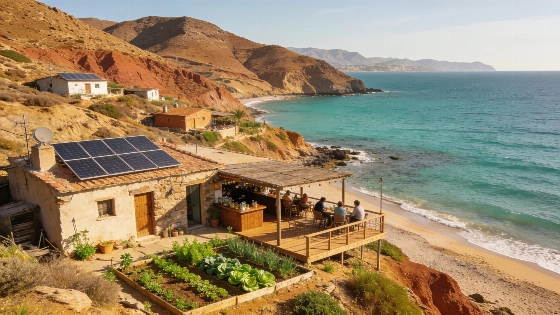
Estimates suggest around 50 people live here, though numbers fluctuate, especially in summer. The settlement has drawn renewed attention after content creator Noemí Rocamora Doménech shared a video revealing daily life in the cove. Residents have adapted abandoned structures and built new shelters using local materials, creating a patchwork of homes that blend into the arid hillsides and overlook turquoise waters.
Living Off the Grid
With no road or vehicle access, everything in Cala de San Pedro is shaped by necessity. The community relies on a natural spring for water, which sustains both the residents and their small vegetable gardens. Solar panels provide limited electricity, powering essentials and allowing for a modest level of comfort. The cove’s isolation has fostered a spirit of resourcefulness, with composting toilets and a simple playground for children among the visible signs of adaptation.
At the heart of the settlement stands a rustic bar, its terrace facing the sea. This communal space serves as a gathering point and a source of income, especially during the busy summer months when visitors arrive by boat or on foot. Many residents supplement their livelihoods by crafting and selling handmade goods—leatherwork, jewelry from shells, and other items shaped by the environment.
Community and Tension
Life in Cala de San Pedro is not without its challenges. While the community is often seen as a model of self-sufficiency and alternative living, residents acknowledge that daily coexistence brings its own set of conflicts. As one person notes in Rocamora Doménech’s video, “it’s not all as idyllic as people imagine.” Disagreements and personal differences are part of the reality, requiring constant negotiation and compromise to share limited resources and space.
The cove’s unique way of life stands in contrast to the routines of urban Spain. Like other unconventional living arrangements—such as those who turn vehicles into homes and businesses, as seen in stories like a young woman transforming her van into a mobile home and workshop—the residents of Cala de San Pedro have chosen a path that prioritizes autonomy, sustainability, and community, even as it demands resilience and adaptability.
Enduring on the Edge
Despite the difficulties, the settlement at Cala de San Pedro endures. Its continued existence is made possible by the spring, the ingenuity of its inhabitants, and a willingness to accept both the freedoms and the frictions of communal life. The cove remains a rare example of long-term off-grid living in Spain, shaped as much by its natural isolation as by the choices of those who call it home.