Mercedes has shifted its focus to developing its 2027 Formula 1 car, easing updates to its dominant 2026 contender. With Antonelli and the team well ahead, Toto Wolff is betting on early adaptation to sweeping technical rule changes.
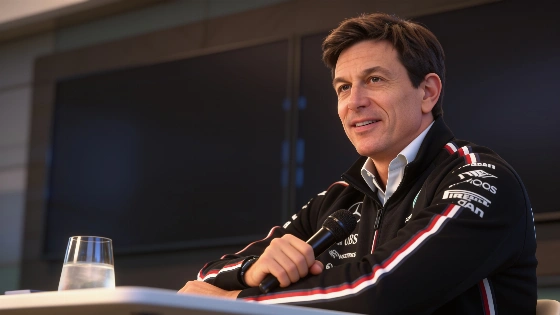
Mercedes has quietly launched a bold Formula 1 strategy: while rivals scramble to close a 145-point gap in the 2026 constructors’ standings, the Brackley team is already months into developing its 2027 car. Toto Wolff confirmed the move in Madrid, marking a calculated shift in priorities that could shape the next era of the sport.
Andrea Kimi Antonelli’s win at the inaugural Madrid Grand Prix was Mercedes’ tenth victory in fourteen races, underscoring a dominance that has left Ferrari and McLaren fighting for the remaining points. Behind the scenes, Mercedes has intentionally slowed updates to its current W17. Since the last major upgrade in Canada, only minor, circuit-specific tweaks have been introduced. Ferrari and McLaren, meanwhile, have pushed out new parts relentlessly, but the standings remain unchanged.
According to Motorsport and Grand Prix, Mercedes still plans to bring at least one more major upgrade to the W17 later this season, so the shift to 2027 is gradual, not immediate.
Wolff’s reasoning is straightforward: “Engineering resources are finite.” With wind tunnel hours and simulator time capped, Mercedes is using its comfortable lead to redirect effort toward the 2027 project. “When you have a good cushion, it makes sense to start early on the next car rather than squeezing every drop from the current one,” Wolff said in Madrid. Still, he remains cautious—two DNFs or accidents could erase that margin instantly, as Mercedes learned at Monza when both Charles Leclerc and Lewis Hamilton were caught out in the opening corners.
The real surprise from Wolff was about timing. Mercedes began work on its 2027 car before the summer, well ahead of the usual schedule. This isn’t just a tactical move—it’s a response to sweeping technical changes coming in 2027. The FIA’s new rules will overhaul both power units and aerodynamics: combustion engine output rises from 400 to 420 kilowatts, MGU-K peak drops from 350 to 300 kilowatts, and battery capacity increases to 4.5 megajoules. Aerodynamic downforce will be reduced by up to 50 points to curb runaway performance. Teams that start late risk being left behind when the new era begins.
Mercedes’ head start could prove decisive. As Wolff put it, “We redirected resources toward next year in the summer, and that continues as planned, regardless of our championship position.” The team’s engineering departments are already adapting to the new technical landscape, aiming to secure an advantage before rivals even finish their 2026 campaigns.
The urgency of Mercedes' shift is directly linked to the FIA's 2027 regulations, which are expected to significantly restructure both power units and aerodynamics. Independent summaries of the rules highlight an increase in combustion engine output to 420 kW, a reduction in MGU-K to 300 kW, a battery capacity boost to 4.5 MJ, and a cut in downforce by about 50 points.
That doesn’t mean Mercedes is ignoring the present. Wolff confirmed a “solid” upgrade package is ready for the Malaysian Grand Prix at Sepang in October—the first significant update since Canada. The team is cautious about its immediate impact, noting that not every upgrade suits every track. Sepang’s demanding mix of long straights and technical corners will be the real test, with Bakú serving as a possible preview. The timing is symbolic: Malaysia returns to the calendar after nine years, with Petronas—Mercedes’ title sponsor and the circuit’s namesake—playing a central role in bringing Formula 1 back to Sepang after Middle East conflicts forced the relocation of the Bahrain Grand Prix.
The prospect of Antonelli clinching the world title at Petronas’ home circuit is a narrative few could script better. Still, the math suggests the championship will likely be decided after Sepang, unless Mercedes suffers a string of disastrous results during the Asian triple-header.
Meanwhile, Ferrari and McLaren have thrown everything at their 2026 cars. Ferrari’s comprehensive Hungary upgrade made the SF-26 a force in corners, while McLaren’s adoption of the rotating rear wing has delivered flashes of speed—Lando Norris took wins in Hungary and Zandvoort. Yet, neither team has managed to consistently threaten Mercedes’ supremacy. Even McLaren’s Andrea Stella admits Ferrari has the best chassis, but the Mercedes power unit remains the difference-maker.
Wolff’s approach is clear: avoid complacency, but don’t waste resources chasing points already in hand. “In my opinion, only ignore the points until it’s no longer mathematically realistic, or no longer realistic, that they can win, and until then just focus on each week and try to do our best,” he said in Madrid. This philosophy is shaped by past heartbreaks—when Mercedes looked untouchable, only to lose a title on the final lap.
This approach echoes the logic behind early EV adoption in Spain, where teams and drivers who invested ahead of the curve reaped long-term rewards, as reported earlier.
Mercedes’ decision to pivot early toward 2027 is not just a luxury of dominance—it’s a calculated risk that could secure an advantage for years. With technical upheaval on the horizon and rivals still fighting yesterday’s battles, the team’s willingness to look beyond the immediate scoreboard is the kind of move that separates serial winners from the rest of the grid. If the gamble pays off, Mercedes won’t just win the last championship of this era—they’ll be first in line to shape the next.