Choosing the right electric SUV for Spanish road trips now means balancing real highway range, charging speed, and public network coverage. We break down the numbers and models that make long-distance EV travel routine instead of risky.
On Spain’s highways, the difference between a 380 km and a 500 km real-world range in an electric SUV is more than just a number. It can mean one less stop, a shorter break, or a less stressful ride with kids in the back. For anyone driving from Madrid to Málaga or Barcelona to Vigo, picking the right SUV and knowing where to charge has turned long EV trips from a headache into something you can plan for and repeat.
Brochure figures don’t tell the whole story. The WLTP range is a lab number, not a promise. At 120 km/h, with the air conditioning on and a full trunk, most electric SUVs manage only 65–75% of their official range. So a 500 km WLTP model will actually cover about 340–370 km on the motorway. For most Spanish routes, 500 km WLTP is the comfort baseline, while 600 km gives you real flexibility. Anything under 450 km means an extra stop every trip, which adds up over time.
Spain's official public charging network now includes over 42,000 points, but depending on counting methods, some industry sources report more than 52,000 operational locations as of September 2026.
EFE/Aedive
Charging speed matters
Manufacturers like to advertise peak charging power—“up to 250 kW”—but what really counts is the average speed between 10% and 80% battery. An 800 V system can hold 180–200 kW on average, cutting stop times to about 20 minutes. Standard 400 V models usually charge at 100–130 kW, so the same charge takes 35 minutes or more. For an 80 kWh battery, a 25-minute 10–80% charge is quick; 35 minutes is fine; anything longer starts to feel slow on a long trip.
Spain’s public charging network has improved. Ionity covers main routes with 350 kW hubs every 150–200 km. Zunder has grown fast in the north and along the A-3, offering 150–300 kW. Tesla Supercharger, now open to many non-Tesla cars, is still the most reliable—plug in and it works. Iberdrola fills in the gaps, especially off the main highways. Only parts of Extremadura and the Ruta de la Plata still need careful planning with an app.
According to official communications from La Moncloa, Spain is introducing stricter requirements for high-power charging at fuel stations: those selling over 10 million liters annually must install at least 400 kW chargers, rising to 600 kW from 2027. This policy aims to ensure that intercity routes are equipped for ultra-fast charging, directly targeting the needs of long-distance EV travelers.
La Moncloa
Model showdown
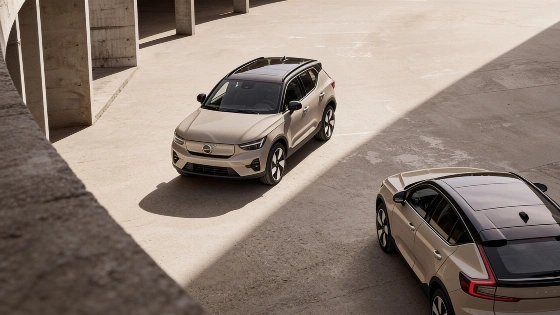
The Volvo EC40 Extended Range is well-balanced: 582 km WLTP, 82 kWh battery, and a comfortable drive, though its charging speed is average. The Twin Motor version adds all-wheel drive and 408 CV, but uses more energy and costs more. The Volvo ES90 goes further, with 650 km WLTP, 92 kWh, and 333 CV—less of an SUV, more of a grand tourer, but a strong choice for those who want comfort and range.
Tesla’s Model Y Long Range is still the easiest for charging. Built-in Supercharger access, automatic route planning, and battery pre-conditioning make it practical for travel. Its WLTP range is about 600 km, and its charging curve is one of the best. The interior isn’t as refined as Volvo’s, but for travel efficiency, it’s hard to match.
BMW’s iX3, now on the Neue Klasse platform, promises better efficiency and charging, but its real-world performance in Spain is still untested. Hyundai’s IONIQ 5 and Kia’s EV6, both with 800 V systems, can charge from 10–80% in as little as 18 minutes at 350 kW stations, with WLTP ranges from 500 to 570 km. The IONIQ 5 is especially quick to charge, while the EV6 is sportier but has a slightly lower range.
What the numbers say
For long trips, the numbers are clear. The Tesla Model Y Long Range scores highest for travel (9.5/10), followed by the Volvo ES90 and BMW iX3 (9.0), then the Volvo EC40 Extended Range and Hyundai IONIQ 5 (8.5), with the Kia EV6 close behind (8.0). Prices start around 45,000 € for the Hyundai and go up to over 72,000 € for the Volvo ES90, before discounts or government incentives like Plan Auto+.
If you want more context, the earlier review of the Mercedes CLA 250 Plus Shooting Brake is a good reference for real-world range and charging in the premium segment.
Practical realities
To avoid extra stops, aim for at least 500 km WLTP. An 800 V system is a real plus for frequent travelers, but a well-tuned 400 V model like the Volvo EC40 Extended Range is fine for occasional long trips. Tesla Superchargers are open to most brands in Spain, though non-Tesla drivers pay a bit more. Plan Auto+ incentives apply to these models, depending on price and eligibility.
As Spain’s charging network grows and more models offer 800 V systems, long EV road trips are getting easier. The main question now is how much time and comfort you’re willing to trade for price, brand, and driving feel. For buyers who care about real range, fast charging, and network reliability, there have never been more good options.