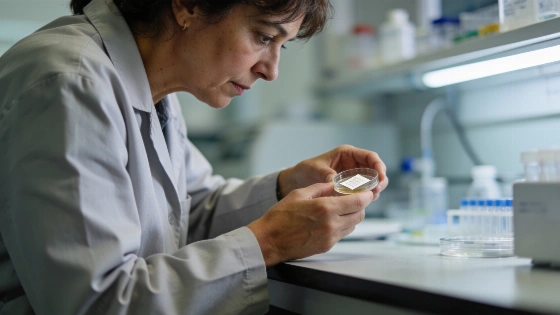
Diagnosed with breast cancer at 34 while researching pancreatic regeneration, Meritxell Rovira now studies pancreatic tumours. At 48, she is concerned by the rise in cancers among people under 40.
A two-centimetre pancreatic tumour is associated with a five-year survival rate below 10%, Meritxell Rovira says. For a breast tumour of the same size, the figure is 95%. That gap drives her work on earlier diagnosis and more personalised treatment. For pancreatic ductal adenocarcinoma, five-year overall survival is estimated at about 12%. When the disease has spread to distant sites, survival is typically below 5%. Prognosis also depends on the cancer’s stage. It changes if the tumour has metastasised or cannot be completely removed, so size alone does not determine the outlook. For some localised tumours, surgery combined with preoperative chemotherapy can bring five-year survival above 40%.
Rovira is a biologist and doctor in Health and Life Sciences. She now researches at IDIBELL and the University of Barcelona. Cris contra el Cáncer funds her project, which examines how pancreatic tumours differ according to the cells where they begin. Those differences could help researchers match treatment more closely to a tumour’s origin. A study in Nature Genetics by researchers at the University of California San Diego described how pancreatic tumours can evolve to evade treatment. It adds to research into the biological differences that shape treatment response.
Nearly half of pancreatic cancer patients first present with advanced disease.
Rovira is also concerned by the rise in malignant tumours among people under 40, particularly gastric cancers. Pancreatic cancer is usually diagnosed in older people, often from 60 to 65, she says, but it is part of the pattern she is watching. Researchers are still trying to pin down the reasons. In a study published in Annals of Surgical Oncology, diagnostic delays were associated with a 3.4-fold lower likelihood of surgery and a 1.7-fold increase in first-year mortality. There is no standard early-detection test for the general population.
Possible explanations include lifestyle changes over recent decades. Researchers are examining poorer diets and more sedentary habits, along with microbiota and environmental factors. More advanced diagnostic techniques may account for some earlier detection. Separate work on AI mammogram risk assessment has explored how women’s risk might be identified before cancer is found.
Rovira knows the patient’s side of the problem. At 34, while completing a postdoctoral fellowship in pancreatic regeneration research, she found a breast lump while still breastfeeding. Three mammograms and three ultrasounds over six months failed to reveal it. She pressed for further investigation, and a biopsy was eventually carried out. The diagnosis was malignant.
She underwent a mastectomy on her left breast, followed by chemotherapy. Radiotherapy came next. Reconstruction came later, and she took hormonal treatment for a decade. Now 48, she no longer needs medication and has annual check-ups.
During treatment, Rovira became pregnant naturally with her second child after discussing a temporary pause in hormone therapy with her oncologist. She took part in POSITIVE, a clinical study for women of childbearing age who were on hormonal treatment and wished to become pregnant. The study found that temporarily interrupting treatment under close medical supervision did not increase the risk of recurrence.
Her experience changed how she approaches laboratory work. Contact with patients and families makes each sample feel personal, she says. In her lab, she receives samples from people with pancreatic cancer and sees the person behind each one, rather than a number.