Across six centres, an AI model ranked the top 10% of women by risk; that group accounted for about 30% of cancers found within five years in preliminary results.
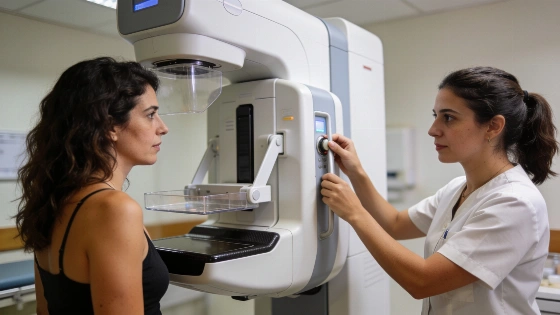
Researchers reviewed 27,172 mammograms read as normal and recorded 2,011 cancers during more than five years of follow-up. In preliminary findings from a six-centre study, the 10% of women assigned the highest risk by the AI accounted for about 30% of cancers detected over the next five years. The Spanish medical publication Redacción Médica reported the figures on 15 October 2026.
Among the same share of women selected by breast density alone, the cancers amounted to 13% of the total. The AI model’s area under the curve, or AUC, was 0.71 at two years, 0.70 at three years and 0.69 at five years. A higher AUC indicates a better ability to distinguish between women who develop cancer and those who do not.
Hospital Universitario Reina Sofía de Córdoba is the only Spanish centre in the international study, which includes six sites in the United States and Europe. Researchers are testing the tool with equipment from three manufacturers, building on an earlier validation at one European centre and one US centre. The results remain preliminary and are due to be presented in more detail at the European Congress of Radiology.
The model, Transpara Risk Index, uses deep learning to assess a mammogram and estimate the likelihood of breast cancer over the following five years. It measures breast density and detects tissue texture patterns invisible to the human eye. The system was trained on more than 200,000 mammograms and around 6,000 cancers, with follow-up exceeding 13 years. It is designed for digital mammograms and tomosynthesis, or three-dimensional mammography.
An earlier external validation, based on more than 65,000 examinations at one European centre and one US centre, recorded an AUC between 0.73 and 0.75. In that analysis, the 10% of women at highest risk accounted for 39.3% of cancers. Those results came from a separate analysis with different participants and follow-up periods, so they cannot be compared directly with the preliminary multicentre findings. The current study aims to provide an independent, large-scale validation across sites and equipment.
The tool estimates future risk. It does not detect a tumour already present. It is applied to mammograms interpreted as normal or benign, so its score would inform future screening decisions rather than replace a radiologist’s assessment of the current scan.
Screening is currently the same for all women, despite differences in individual risk. Clinical models such as Gail and BOADICEA use information including age and reproductive history. The Breast Cancer Surveillance Consortium model, known as BCSC, also uses those factors. In a comparison of women examined with both digital mammography and tomosynthesis, the AI model had a higher AUC than BCSC, scoring 0.66 compared with 0.60. Against Gail, its score was 0.67, compared with 0.58. These results apply to that comparison group, not the main multicentre analysis.
A separate retrospective Swedish study, described by Diagnostic Imaging, analysed 20,187 mammograms from 7,430 women screened between 2008 and 2016. It recorded 741 cancers within two years: 524 were detected through screening and 217 were interval cancers. In that dataset, Transpara Risk had an AUC of 0.81. Transpara Detection and Mirai Risk each scored 0.76, while RSNA Detection scored 0.72. The Swedish study used a different population and forecast period from the current five-year validation.
Marina Álvarez, a breast radiologist at SERAM and head of Radiodiagnóstico at Hospital Universitario Reina Sofía, says mammography-based assessment could be quicker to apply across a screening programme because it requires no questionnaire. She is also a researcher at the Instituto Maimónides de Investigación Biomédica de Córdoba, or IMIBIC, which is taking part in the study.
If validated for clinical use, the approach could allow screening to be adjusted to individual risk. Álvarez described changing screening intervals and adding more sensitive tests, such as magnetic resonance imaging or contrast-enhanced mammography, for women at higher risk. Women at lower risk could be screened less often or might not need screening. These are possible strategies, not current policy.
Personalised care has also featured in earlier arthritis reporting in Spain. For breast screening, Álvarez says the model needs further independent validation across different equipment and populations, followed by an assessment of its clinical impact. Professionals and the public would also need guidance on interpreting risk results.