A total solar eclipse swept across Spain, drawing millions outdoors. Provinces rarely in the spotlight became the focus of global attention. Authorities deployed thousands to manage crowds and ensure safety.
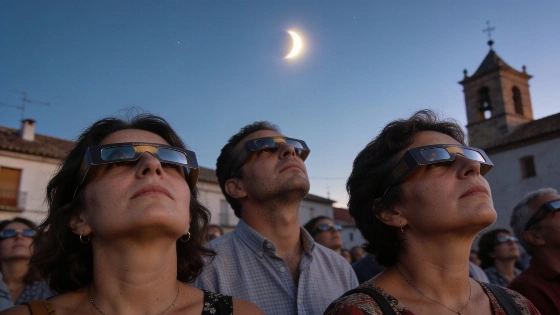
Spain experienced a historic astronomical event as a total solar eclipse crossed the peninsula for the first time since 1905. From the Cantabrian coast at 20:26 to the Balearic Islands at 20:34, a shadow nearly 300 kilometers wide moved at high speed, plunging 31 provinces into brief darkness. The phenomenon, visible to at least 15 million people under mostly clear skies, united the country in a rare moment of collective awe.
Authorities had anticipated a surge in travel, with estimates of up to 1.5 million additional journeys as people sought the best viewing spots. The government deployed nearly 35,000 police and civil guard officers to manage traffic, prevent wildfires, and maintain order. In regions like Soria, Palencia, Teruel, and León, small towns became temporary epicenters of celebration, hosting thousands of visitors and international media. Castrillo de la Reina, a village of just 121 winter residents, welcomed over a thousand eclipse watchers and journalists, including a team from The New York Times.
While Spain enjoyed clear conditions, Iceland, the only other inhabited territory in the eclipse's path, was clouded out. The event was closely monitored from the Yebes Observatory in Guadalajara, where officials described the day as a 'World Cup final' for astronomy. The eclipse also revived old fears, prompting health authorities and ophthalmologists to issue strict warnings about eye safety. Public viewing events, such as those in Frómista (Palencia), featured expert guidance on when to safely remove protective glasses to glimpse the solar corona.
Social media played a major role, with millions sharing photos and videos in real time. The surge in digital activity led to concerns about network overload, while the risk of wildfires prompted the Ministry for the Ecological Transition to ban lighting fires and parking on dry vegetation. The economic impact was significant, with estimates of up to 400 million euros in added value and half a million extra tourists drawn by astrotourism.
Spain's scientific community used the occasion to highlight the importance of evidence-based knowledge. Prominent figures like Pedro Duque and Diana Morant called for public trust in science, especially in an era of misinformation. The eclipse also served as a rehearsal for a future event in 2027, when another total eclipse is expected to cross southern Spain and North Africa.
For many, the eclipse was a once-in-a-lifetime experience. The last similar event occurred in 1905, and the next will not take place until 2180. The spectacle left a lasting impression, especially in rural areas where the night sky is still visible in its full glory. As noted in a related report, strict safety protocols were emphasized nationwide to prevent eye injuries during the eclipse.
Total solar eclipses are rare, and their paths are unpredictable over centuries. Spain's experience in 2026 highlighted both the country's capacity for large-scale coordination and the enduring fascination with celestial events. The event also underscored the value of rural regions as prime locations for astronomical observation, drawing attention and resources to areas often overlooked in national discussions.