Two years after Isak Andic’s fatal accident near Montserrat, most hikers remain unaware of the high-profile case. The trail has changed, but the memory of the incident fades among visitors.
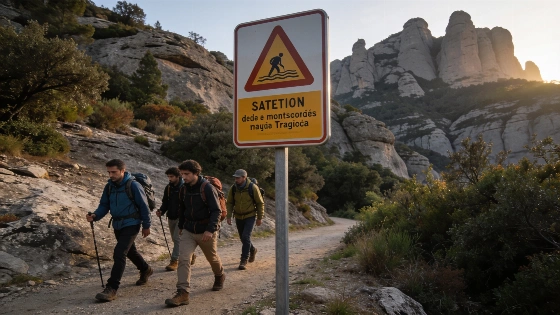
The mountain path leading to Montserrat, where Mango founder Isak Andic died in December 2024, has seen little change in the habits of its visitors. Despite the media attention surrounding the case, most hikers and runners using the route today are unaware of the tragedy that unfolded there. Early on a hot August morning in 2026, the only sounds near Collbató are church bells, as people set out along the Feixades trail, now marked with new safety signs advising proper gear, weather checks, and not hiking alone.
Yet, these warnings are often ignored. Runners and walkers pass by the spot where Andic fell, many without knowledge of the incident or its significance. One runner, pausing briefly, admits to knowing a fashion magnate died on the trail but cannot pinpoint the location, even as he stands at the very site. Others, like Iván Góngora, waiting to enter the Salnitre Caves bordering the path, confess to being disconnected from news for years and have no idea about the death or the subsequent arrest of Andic’s son, Jonathan, in May 2026 on suspicion of involvement.
The investigation, dubbed 'case Monestir' by the Mossos d’Esquadra, initially aimed for discretion. However, the combination of Andic’s prominence and the circumstances of his death—while walking alone with his eldest son—quickly drew public and media scrutiny. Despite this, the event has left little mark on the daily life of the trail. Groups of young hikers, like Paula Campderrós and her family, are surprised to learn of the incident, with some confusing Andic with other well-known Spanish entrepreneurs. The idea of visiting the exact spot as a form of 'thanatourism' is mentioned, but for most, the trail remains simply a route to Montserrat.
Interest in visiting sites of tragic events is not new in Spain. In other regions, such as Girona, unresolved cases like the Sa riera drowning have drawn attention and calls for accountability, as seen in reports such as the ongoing Begur case. However, on the Montserrat trail, the memory of Andic’s death is fading, with only minimal changes to signage and little public discussion among those who pass by.
Montserrat remains one of Catalonia’s most symbolic destinations, attracting both tourists and locals. The path’s safety measures have been updated, but the lack of awareness among visitors highlights how quickly even high-profile incidents can recede from public consciousness. The case also reflects a broader trend: despite intense media coverage at the time, the practical impact on daily routines and local tourism appears limited. For many, the trail is unchanged—a place for exercise, nature, and tradition, rather than a site of tragedy.
Montserrat’s significance as a religious and cultural landmark continues to draw thousands each year. The incident involving Isak Andic, while notable in the national press, has not altered the fundamental character of the route. The story serves as a reminder of how quickly news cycles move on, and how local memory can differ sharply from national headlines.