Moonshot AI has suspended new Kimi K3 subscriptions after demand outpaced capacity. The move comes as the company seeks new funding and prepares for a Hong Kong IPO. Existing users remain unaffected, but future access is uncertain.
Moonshot AI, one of China's most prominent artificial intelligence startups, has suspended new subscriptions for its Kimi K3 model after a surge in demand pushed its computing resources to the limit. The company, which recently unveiled the 2.8-trillion-parameter Kimi K3—now considered the world's largest open-weight AI system—announced the pause as it faces mounting pressure on its infrastructure and prepares for a potential listing in Hong Kong.
The decision to halt new sign-ups was triggered by a sharp spike in user activity following Kimi K3's launch. According to Moonshot, requests over the past two days have far exceeded forecasts, bringing the company's GPU clusters close to capacity. To manage the strain, Moonshot has prioritized current paid users, ensuring their service remains uninterrupted, while new consumer subscriptions are temporarily on hold. The company also plans to introduce two separate membership options, including a coding-focused plan, to better align computing resources with user needs.
Behind the scenes, Moonshot is restructuring its offshore holdings in anticipation of a Hong Kong initial public offering. Sources familiar with the process told Reuters that the company is working with financial advisers such as Goldman Sachs and China International Capital Corp, though the IPO timeline remains uncertain. Both Moonshot and Goldman Sachs declined to comment, while CICC did not respond to inquiries.
Founded in 2023 by Yang Zhilin, an AI researcher with academic roots at Carnegie Mellon University, Moonshot has quickly become a focal point for investment in China's AI sector. In May, the company secured over $2 billion from backers including Meituan, China Mobile, and CPE, bringing its total fundraising to more than $5.5 billion. By June, Moonshot's valuation had reached $30 billion, and it is now seeking up to $2 billion in additional capital to expand its computing capabilities.
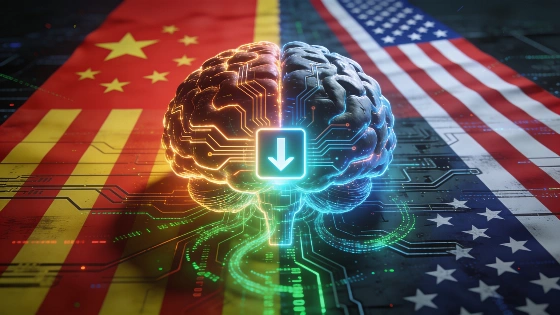
The rapid uptake of advanced AI models like Kimi K3 is fueling intense competition among Chinese tech firms, all vying to close the gap with U.S. leaders. Moonshot's rivals, such as DeepSeek, have also turned to external investors to boost their infrastructure. The high cost of serving large-scale models, especially those optimized for coding and agent-style tasks, remains a significant challenge, as these applications require repeated and resource-intensive model calls.
While Kimi K3 is available as an open-weight model—allowing users to download and customize the system—analysts note that few organizations are equipped to host such a massive model independently due to the prohibitive hardware requirements. Moonshot claims Kimi K3 matches or exceeds the performance of leading U.S. models in certain technical benchmarks, a point echoed by independent evaluations. The launch coincides with similar moves by other Chinese AI firms, including Z.ai and MiniMax, which are releasing increasingly capable models at lower costs.
Competition in the sector is further highlighted by Alibaba's recent debut of Qwen3.8-Max-Preview, a 2.4-trillion-parameter model, on its AI platforms. However, ongoing U.S. export controls on advanced Nvidia chips continue to restrict access to the high-performance computing power needed for these ambitious projects.
China's AI industry has seen explosive growth in recent years, with startups like Moonshot at the forefront of technological innovation and investment. The current capacity crunch underscores the challenges of scaling AI infrastructure in a market where demand can outpace even the most aggressive forecasts. As the sector evolves, the ability to secure both funding and hardware will likely determine which companies can maintain their momentum and deliver on the promise of next-generation AI systems.