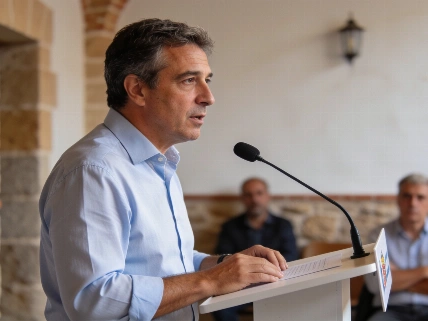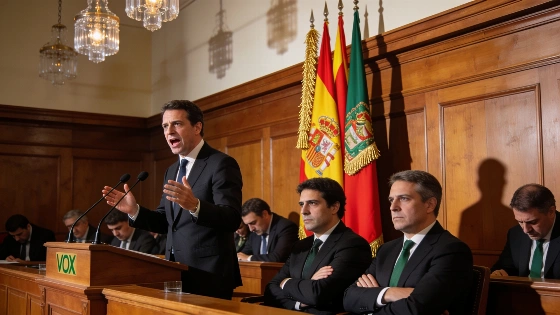
Juan Manuel Moreno, acting president of the Junta de Andalucía, entered his third investiture debate without an agreement with Vox, whose support he needed to secure re-election. The Partido Popular (PP-A) won 53 of the Parliament of Andalusia’s 109 seats in the May 17, 2026 election, two short of the 55 required for an absolute majority. Vox’s 15 seats made it the decisive potential partner, giving the two parties a combined 68-seat majority.
Moreno presented his government program on Monday, opening a session that could determine the region’s political future. The PP-A received approximately 41.5% of the vote, while Vox won almost 14%. The PSOE-A secured 28 seats, its lowest representation in the regional chamber. Adelante Andalucía won eight seats, and Por Andalucía five. The result reversed the outcome of 2022, when the PP won 58 seats and governed alone with an absolute majority. Vox gained one seat from its previous total of 14. The session was due to continue on Tuesday, when parliamentary groups would respond in order of their representation. Their speeches were expected to clarify Vox’s position unless a last-minute deal emerged.
Since negotiations began on June 9, both parties had kept details tightly under wraps. “There’s nothing to report because there’s nothing to tell,” representatives from the PP and Vox insisted, fueling speculation about the sticking points. Basic questions remained unresolved: would Moreno offer Vox positions in his government, despite campaigning against the party’s presence in the regional executive? And would he accept Vox’s demand for “national priority,” a policy that would give Spanish nationals preference over foreigners in access to public aid and services, as seen in agreements in Extremadura and Aragón, as well as Castilla y León?
The outcome in Andalusia could have broader implications for Spain’s political field. Recent developments in other regions, including pressure on PSOE leadership to prevent a far-right government, highlight the national stakes. For example, calls for Pedro Sánchez to step aside have intensified amid fears that parties such as Vox could gain greater influence.
Later developments turned Vox’s parliamentary use into formal power-sharing. The PP-A and Vox signed an agreement containing 150 measures, along with arrangements for budgets and institutional posts, and formed Andalusia’s first PP-Vox coalition government. Vox’s regional leader, Manuel Gavira, became a basic figure in the new administration and was reported to have received a major department with vice-presidential rank. The agreement also prompted disputes over institutional oversight and the implementation of its commitments.
A Fundación CENTRA barometer, conducted among 3,600 adult residents of Andalusia from September 11 to 25, projected the PP-A at 52-53 seats, still short of a majority. Vox was projected to rise to 16-20 seats, while the PSOE-A was forecast to fall to 23-26. Adelante Andalucía was projected to win nine to 10 seats. The poll, reported by Europa Press, suggested Vox could gain bargaining weight even if the PP remained the largest party.
The coalition’s durability has also been tested through budget negotiations and decisions on oversight. ElDiario.es reported that the parties were governing together without major public ruptures several months after the election, while some commitments in their agreement were scheduled to take effect before the end of 2026. A dispute over a proposed investigation into the Andalusian screening crisis has highlighted how Vox’s support can shape the executive and parliamentary accountability. The episode shows the national significance of the negotiations that began with Moreno short of a majority and dependent on Vox’s backing.