Morocco’s public works minister has openly reaffirmed the country’s claim to Ceuta. The statement comes amid diplomatic friction and recent border incidents. Spain’s government now faces a direct challenge to its territorial stance.
Morocco has sharpened its stance on Ceuta, with Nizar Baraka, Minister of Public Works and Water, declaring at a party rally that Rabat will not give up "a single inch" of what it considers its territory—including Ceuta. His remarks come as Spain tries to manage the fallout from the latest border crisis and keep relations with Morocco stable.
Baraka is not alone. In recent weeks, other Moroccan officials have also spoken publicly about claims to Ceuta and Melilla. The Minister of Religious Affairs, Ahmed Tufiq, even used the word "liberation" in front of King Mohamed VI. These statements followed a mass crossing of migrants at the Ceuta border on July 30, which reignited debate over sovereignty and border security.
According to Spain English, over 70,000 people crossed from Morocco into Ceuta during the July 30–31 border incident—far exceeding initial estimates.
Spain has responded with a mix of caution and firmness. Prime Minister Pedro Sánchez told parliament that Ceuta and Melilla are a "red line" in relations with Morocco and that Spain will not compromise on its territorial claims. He called for a "prudent" approach to bilateral ties but made clear Spain would defend its position. Sánchez also revealed that Spain summoned Moroccan ambassador Karima Benyaich on August 21, a move that had not been previously disclosed and drew criticism from both government partners and opposition parties for its secrecy. According to Morocco World News, this step was taken in direct response to statements by two Moroccan ministers about Ceuta and Melilla.
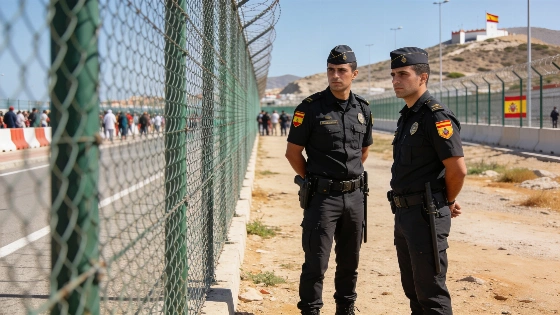
The diplomatic standoff comes on top of practical problems at the border. The July incident, which saw thousands of migrants enter Ceuta, exposed weaknesses in Spain’s border management and led to political scrutiny. As reported earlier, divisions within the Spanish government have complicated the response, with disagreements between law enforcement and ministries over how to handle sensitive intelligence about Morocco’s role. Prime Minister Sánchez has said—according to Reuters and other outlets—that neither the Spanish Foreign Ministry, the European Commission, nor any international bodies have provided reliable evidence that Morocco planned or orchestrated the mass crossing.
For Madrid, the stakes are high. Ceuta and Melilla are not only symbols of sovereignty but also key points for border control, migration policy, and regional security. Any sign of hesitation could encourage further Moroccan claims and weaken Spain’s position in the EU. The government’s push for "good neighbor" relations is now being tested by Morocco’s public demands and the day-to-day realities at the border.
A recent report by Spain’s National Center for Immigration and Borders (CENIF), cited by AFP and Barron’s, found that Moroccan police showed 'total leniency' during the July border surge, making little effort to push back crowds from the perimeter. This has fueled debate in Spain over the extent of Moroccan authorities’ responsibility and the effectiveness of bilateral security cooperation.
Morocco’s approach seems deliberate: assertive enough to keep the territorial issue alive at home, but still describing Spain as an "essential partner." This lets Rabat rally domestic support while keeping leverage in talks over migration, trade, and security. For Spain, the challenge is to avoid escalation without giving ground—a difficult balance, especially with political pressure at home and unpredictable developments in North Africa.
Spain’s position on Ceuta and Melilla is based on international law and long-standing administrative control, but Morocco’s repeated claims keep the issue active in their relationship. The latest statements from Moroccan ministers are not just talk; they show a willingness to keep the dispute in the spotlight and test Madrid’s resolve. Spain’s leaders now face a clear choice: reinforce their position with visible action or risk being drawn into a cycle of provocation and response that could strain the broader relationship.