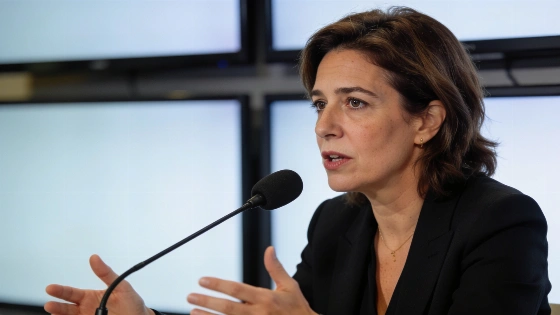
At the PP campaign launch in León, Ester Muñoz urged voters to choose a reformist government led by Alberto Núñez Feijóo over Pedro Sánchez. She also accused Sánchez of taking 36 hours to condemn violence in Catalonia.
The PP’s Senate arrangement with Vox opened a second front at the party’s campaign launch in León on 26 October, ahead of the 29 November general election. The agreement coordinated candidacies in 23 provinces to avoid competing lists and shore up right-wing representation in the upper chamber. It was an electoral arrangement, not a parliamentary coalition or government agreement. Ester Muñoz, the PP’s campaign spokesperson and parliamentary group spokesperson in Congress, defended it as a response to what she described as a left-wing plan to block the Senate. She pointed to critical tweets as evidence that the pact had unsettled the left.
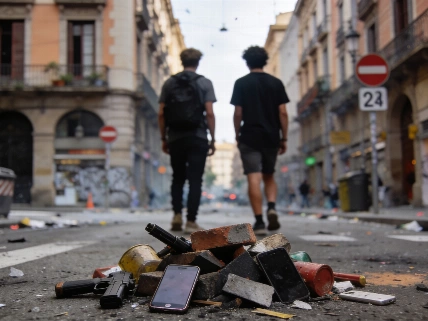
Her sharpest criticism focused on the government’s response to violence in Catalonia. Muñoz said Pedro Sánchez took 36 hours to condemn it and was now trying to shift blame to others. She contrasted that delay with his quicker video response to the PP-Vox agreement. EFE reported her allegation that Sánchez had taken 36 hours to condemn the violence.
A previous report on unrest around Plaça Catalunya described more than 500 people gathering there; Muñoz’s remarks addressed violence in Catalonia more broadly. She also referred to violence in A Coruña, Galicia. Muñoz argued that Spain needs a president able to guarantee public order and security, and said Sánchez was not capable of doing so. She suggested he wanted to prepare the public for what might happen if he lost office.
Muñoz cast the election as a choice between Sánchez and a reformist government led by Alberto Núñez Feijóo. She said she was confident León voters would back that alternative, accusing the prime minister of lying for eight years. Sánchez, in turn, publicly opposed the PP-Vox agreement, saying the parties “say the same thing,” “vote the same thing” and “govern together,” according to El Constitucional.
She also said people in León had contributed more economically in recent years while receiving less in return under the Socialist government. In her assessment, claims by local PSOE representatives that León does well under their party’s governments describe benefits for socialists, not residents generally.
Muñoz described returning to represent León in a general election as both an honour and a responsibility. She argued that the PSOE had questions to answer and suggested this was why it had chosen not to stand for the Senate under its own name in the province, instead joining what she called an amalgam of radical groups. The PSOE and Frente Amplio, comprising Izquierda Unida and Movimiento Sumar, formally submitted a joint León Senate list under the name Senado de Progreso, with Frente Amplio’s Laura Fernández Bermejo in second place. The coalition presented its bid as a push for rights and equal opportunities.
The competing Senate lists formed part of broader efforts by both political blocs to coordinate ahead of the election. The Senate has a role in constitutional and judicial appointments, including renewal of the General Council of the Judiciary, for which a three-fifths threshold is relevant. The parties coordinated to strengthen their influence in the chamber; the 29 November vote would determine the resulting representation.