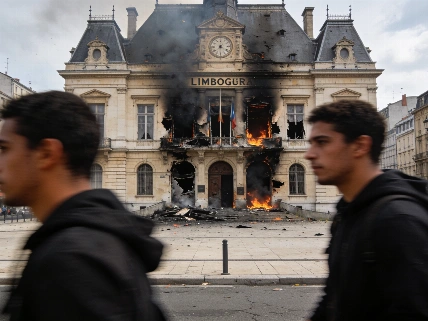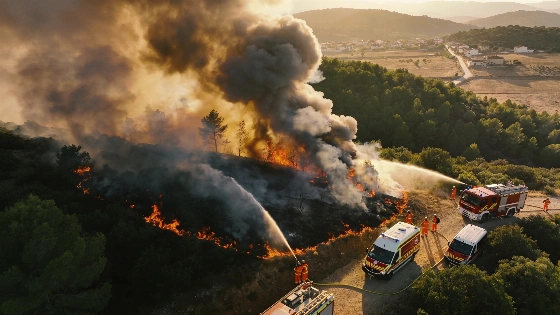
Muriel stands empty after a record wildfire forced urgent evacuation. Over 1,200 people have left 33 municipalities. Firefighters battle extreme conditions as residents wait for news.
Muriel, a tiny village in Guadalajara, is now silent except for the constant drone of helicopters collecting water from the nearby Beleña reservoir. The community was among the first to be evacuated as the La Mierla wildfire swept through the region, burning an estimated 26,000 hectares—making it the most destructive fire in Castilla-La Mancha’s history. Streets are deserted, cars remain parked, and hoses from firefighting teams lie across the asphalt. Clothes hang untouched on balconies, and the church’s mass schedule is still posted, a stark reminder of the sudden departure.
On Monday, 21 aerial units worked to contain the flames threatening this mountainous area. The fire, which reached the outskirts of Muriel last Thursday, advanced so quickly that some fences near homes were scorched before residents could react. Ángel Valenciano, one of only eight registered inhabitants, described the confusion during the evacuation: initial instructions called for residents to shelter in place, but within 20 minutes, the order changed to a full evacuation. Valenciano, now staying with his daughter 41 kilometers away, recalled how the fire arrived in less than an hour after first reports from La Mierla.
The village narrowly avoided disaster thanks to the swift action of two locals, including a firefighter who knew the terrain intimately and intervened before official crews arrived. According to one director from the Infocam wildfire service, Muriel may be among the first villages eligible for return, simply because the fire rarely doubles back over already-burned ground. However, this is not guaranteed, as shifting winds and fire intensity continue to dictate safety conditions.
Firefighters describe the La Mierla blaze as unprecedented in their careers, with spread rates reaching up to 66 meters per minute—far beyond the threshold where suppression is possible. In some areas, flames climbed 20 to 30 meters high, consuming everything from ground stubble to treetops and turning valleys into vast chimneys of smoke and ash. The fire’s head remains largely uncontrollable, with only limited progress made on the flanks. Even wide firebreaks, up to 40 meters, have been breached by advancing flames.
By Monday afternoon, authorities reported that around 1,200 people had been evacuated from 33 municipalities. The director of the Infocam operation, Juan José Fernández, noted that while the fire is far from contained, teams have shifted to a more aggressive strategy for the first time. However, persistent hotspots and unpredictable wind gusts continue to hamper efforts. Early in the day, a thick layer of smoke stretched from the fire’s origin to Guadalajara, covering nearly 50 kilometers. This was caused by a thermal inversion, trapping smoke close to the ground and limiting the effectiveness of aerial firefighting resources.
Residents like Valenciano remain in limbo, relying on a WhatsApp group of about 200 people for updates. None of Muriel’s residents have needed to use the Red Cross shelter set up in Humanes, though around 200 evacuees from other villages have found refuge there. The sense of uncertainty is growing as days pass without news of when they can return or what they might find.
The La Mierla wildfire is the latest in a series of devastating blazes to hit the region in recent years. Earlier incidents, such as the one that forced evacuations in Sierra Norte de Guadalajara, have highlighted the increasing challenges faced by emergency services. For more on the scale of recent wildfires and their impact on local communities, see this report on mass evacuations during a previous Guadalajara wildfire. These events underscore the vulnerability of rural areas to fast-moving fires, especially during periods of extreme heat and wind.
Spain’s rural depopulation and the prevalence of second homes in villages like Muriel complicate evacuation logistics and recovery. As climate patterns shift, the risk of large-scale wildfires is expected to remain high, putting further pressure on emergency response systems and local communities. The situation in Muriel serves as a stark reminder of the ongoing threat posed by wildfires across Spain’s interior.