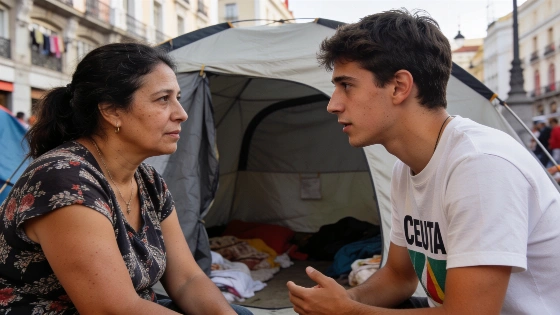
After the July 30 invasion, volunteers and social organisations helped Abdallah Mustafa set up a camp in Ceuta for women and girls who had arrived in the city. Mustafa came to public attention for helping people during the mass arrival from Morocco in 2021, and his later community work focused on housing and neighbourhood services.
On 27 October 2026, PSOE de Ceuta announced Mustafa’s Senate candidacy as an independent backed by Frente Amplio, on a joint list with PSOE called “Senado de Progreso por Ceuta”. The 26-year-old Ceuta-born community leader was selected to lead the slate for the general election scheduled for 29 November. José Miguel Romero, initially chosen as PSOE’s lead candidate, stepped aside and became a substitute candidate. The arrangement brought PSOE and Frente Amplio together behind one left-wing Senate ticket. Socialist Nisrin Haddad represented the party on the list. Mustafa said he entered politics to oppose the advance of the far right.
Mustafa has chaired the Sidi Embarek neighbourhood association since 2022. Before entering electoral politics, he worked as a cook at a centre serving people with disabilities. His campaign drew on the housing shortage he said residents faced in Ceuta. At Madrid’s Puerta del Sol, he supported a housing camp and linked its demands to the situation at home, where he put the number of people on a waiting list or seeking housing at around 8,000. He said many families were living in overcrowded homes with parents and grandparents because they could not secure a home of their own.
Mustafa has also challenged how the events in Ceuta were described. He rejected the word “invasion” and questioned demonstrations calling for a return to normality. He said he had encouraged thousands to return to Morocco because the city was blocked amid a lack of responses, while condemning assaults and mistreatment of those who arrived. His interpretation of the 2021 events and opposition to anti-immigration protest rhetoric became part of the political debate surrounding his candidacy.
The association he leads is based in Sidi Embarek, whose Muslim cemetery became the burial place for people who died during the July 30 invasion. PSOE de Ceuta described Mustafa as a community leader with a long record of direct service to families and neighbourhoods. Romero said his move to the substitute position was intended to support left-wing unity, arguing that a united left was the best way to stop the right.
He also took part in a demonstration opposing the presence of Alvise Pérez in Ceuta. Mustafa argued that Muslim residents should not have their Spanish identity questioned because of their religion. A separate account of PSOE list decisions in Madrid covered a delegate’s resignation after the party left him off its lists.