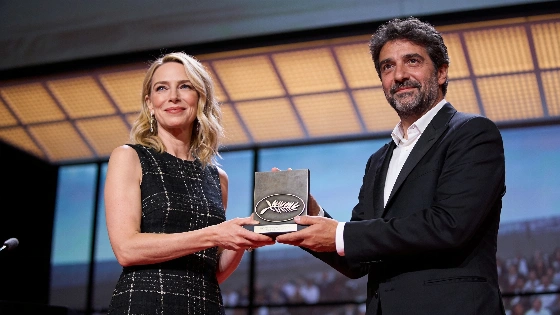
Naomi Watts accepted the Donostia Award at the San Sebastián Film Festival and used the ceremony to call for richer roles for older women. J.A. Bayona presented the honour.
Naomi Watts used the San Sebastián Film Festival's Donostia Award to challenge the narrow stories often given to women as they grow older. The British actress said cinema must keep offering them interesting roles and visible lives on screen. Her speech turned a career milestone into a direct call for better representation. She received the award on 19 September 2026 at the 74th festival, according to the official San Sebastián festival announcement.
J.A. Bayona, the director of 'Lo Imposible', presented Watts with the honour. She has described that film as one of the most important experiences of her career. Watts said she was told at 31 that her professional prospects would be over by 40. That prediction did not define her career. It does explain why she linked the award to a change in the way women are portrayed.
The ceremony took place at the Kursaal Auditorium, where Watts received the second Donostia Award presented at the 2026 festival edition.
Her message was simple. Women need to recognise themselves in cinema. Watts said stories remain essential and that the industry must make room for characters whose lives do not end when they reach a certain age. She also said she feels privileged to work in the profession she loves. She is curious about what comes next.
The award marked a public celebration of a career that began with years of uncertainty.
The honour was connected to Watts’s current festival appearance for The Housewife, also titled La esposa perfecta, rather than being only a retrospective tribute. The festival had announced that Werner Herzog would also receive a Donostia Award in 2026, making Watts one of two laureates in this edition.
Watts recalled ten years of rejection before David Lynch offered her a role in 'Mulholland Drive'. Casting decisions had repeatedly told her she were too much of one thing or not enough of another. She was also told that she did not fit particular parts. Watts did not treat those refusals as a final judgment. She kept working until Lynch gave her an opportunity she had not imagined possible. RTVE described the role as the turning point that moved her beyond that long period of rejection.
She credited Lynch with changing the way she understood acting. His approach taught her to trust instinct, accept uncertainty and not fear what is strange or unexplained. Watts said the experience turned the damage caused by rejection into personal growth. She dedicated much of the Donostia honour to the filmmaker.
Her account also showed why she sees acting as more than a series of jobs. Playing different people has helped her discover parts of herself and learn through other lives. For Watts, that remains the most valuable part of the profession. The official festival account also quoted her view that an actress's pleasure comes from living other people's lives and learning more about herself along the way.
Bayona focused on another decisive moment. He recalled making 'Lo Imposible' as a young director in charge of a production on a scale never previously attempted in Spain. He admitted that the responsibility frightened him. Watts trusted him and followed his direction. In his words, she became the best travelling companion he had worked with.
The director remembered a scene in which María, the tsunami survivor played by Watts, is rescued by Thai women who were not professional actresses. Watts had met the real María and her family while preparing for the role. She also connected with the community that supported the production. She joked about the physical demands of filming, including thirty takes underwater in tanks.
The San Sebastián ceremony brought together two parts of Watts's career. Lynch gave her the breakthrough. Bayona built a relationship based on trust. The Donostia Award recognised the path between those moments. Watts used the platform to say that recognition must be followed by better stories for women who have too often been pushed out of the frame. Deadline reported her view that she entered Hollywood relatively late and that the industry has improved its treatment of older actresses. Visibility for women over 50 remains unresolved. Her speech made the industry's responsibility clear. Representation cannot be treated as a brief phase while audiences and performers still need those lives to be seen.