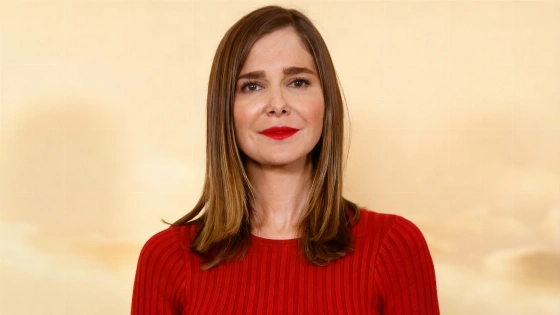
Natalia Sánchez: How the 'Los Serrano' Star Spoke Openly About Therapy. Natalia Sánchez is once again in the spotlight after candidly discussing her childhood and the pressures of fame. The actress shared how psychotherapy became a regular part of her life as early as age 11.
There are few stories in the Spanish show business that spark as much discussion as the journey of Natalia Sánchez — an actress whose name is still associated with the character Teté from 'Los Serrano.' This time, a new wave of interest has been triggered by her honesty: Sánchez not only spoke about her childhood and family but, for the first time, explained in such detail why psychotherapy became an essential part of her life from an early age. As noted by Divinity, it is this personal experience that is now being discussed not only by fans but also by peers in the industry.
Childhood under the spotlight
Natalia Sánchez was born in Madrid and from an early age was surrounded by the world of theater and film sets. By the age of 12, she found herself at the center of one of Spain’s most popular TV series — 'Los Serrano,' acting alongside stars such as Antonio Resines and Belén Rueda. Sudden fame brought not only success but also constant public attention, which, as the actress admits, had a major impact on her teenage years. Simple pleasures — walks with friends, parties, everyday get-togethers — often turned into a challenge: crowds of fans, autographs, photos, endless requests for attention. Sánchez does not hide that it was then she first realized how hard it is to be 'in the spotlight' at such a young age.
Therapy as part of growing up
A special place in her story is devoted to the topic of psychotherapy. According to Natalia, she started seeing a psychologist at the age of 11—not because of any specific problem, but to learn how to cope with the emotions and pressure that came with fame. For her, this became not just support, but a true school of emotional literacy. Sánchez emphasizes that therapy is not a sign of weakness, but a way to better understand oneself and one’s feelings. She is convinced that such practices should be accessible to every child, especially when it comes to public figures. In one interview, the actress admitted she still faces misunderstandings: many people believe that only those with serious problems go to psychologists, even though in reality it can be part of personal development.
Family, work, and new perspectives
Today, Natalia Sánchez lives in stability: a successful career, the 'Sueños de libertad' project, and a strong family with Marc Clotet and their two children. But even now she continues to work on herself and believes that emotional health is a daily task. The actress has repeatedly stated that she would like to see psychotherapy lessons in the school curriculum so children can learn from an early age to understand their feelings and manage anxiety. In Sánchez’s view, this would help many people avoid serious problems in adulthood.
Openness and support
Natalia Sánchez's public stance on mental health issues has already become a topic of discussion in the Spanish media. She is supported by her partner, Marc Clotet, who shares her views on the importance of emotional upbringing. In one of her interviews, the actress noted that she sees no point in hiding the fact of seeing a psychologist; on the contrary, she considers it normal and even necessary for a modern person. This approach resonates with many who have faced similar challenges. Incidentally, the topic of personal struggles and overcoming difficult periods has already been raised in the Spanish press—for example, when discussing the story of Natalia and Víctor Elías, which was covered in more detail in the RUSSPAIN article.
Natalia Sánchez's story is more than just a tale of childhood under the spotlight; it is also an example of how openness and honesty with oneself can become the main resource for living in a world where publicity often sets its own rules. Her journey is yet another reminder that behind success and fame there is always personal effort and a willingness to talk about difficult topics without hesitation.