Spain's National Court has paused a request to Venezuela for information on 14 ETA fugitives. Judges insist each suspect's alleged crimes must be detailed before seeking help. The move affects ongoing investigations into Basque exiles.
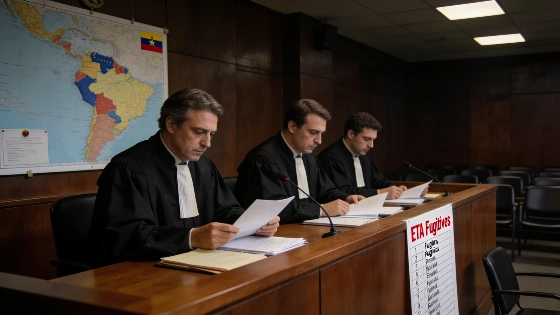
The Spanish National Court has suspended a judicial request to Venezuela for information on 14 alleged ETA fugitives, including Ignacio de Juana Chaos, until the specific accusations against each individual are clarified. The decision, issued by the Fourth Section of the Criminal Chamber, partially upholds an appeal from the defense of seven already charged suspects in the ongoing investigation into the so-called Colectivo de Huidos Políticos Vascos (EIPK).
Judges agreed that the inquiry into the presence of these individuals in Venezuela is both "useful and necessary." However, they instructed Judge Francisco de Jorge to specify which people are being investigated and to detail the particular acts attributed to each before any formal request for assistance is sent to Caracas. This requirement comes after the judge had previously planned to seek information on the 14 suspects at the request of the victims' association Dignidad y Justicia (DyJ), which is acting as a popular prosecution in the case.
The court's resolution references the recent political changes in Venezuela, notably the rise of Delcy Rodríguez following the US-led operation that removed Nicolás Maduro from power in January 2026. The judge had argued that this shift could open the door to cooperation from Venezuelan authorities, especially since some of the suspects are still wanted for attacks dating back to Spain's early democracy. Historically, Venezuela has refused extradition and other forms of legal cooperation in such cases.
The list of individuals for whom information was sought includes not only De Juana Chaos but also José Luis Eciolaza Galán (alias Dienteputo), Eugenio Barrutiabengoa Zabarte (Arbe), María Artola Echeverría, Ángel María Lizarbe Oses, Luis María Olalde Quintela (Txistu), José Ángel Uriz Zabaleta, Arturo Cubillas Fontán, Javier Urruti Imaz, Asunción Arana Altuna (Olivia), Juan José Aristizábal Cortejarena, Manuel Asier Guridi Zaloña (Gari), Jesús María Huerta Fernández, and Ignacio Echevarría Lanzábal. The judge's request was based on alleged links between these individuals and the EIPK, which, according to a Guardia Civil report, operated under the political apparatus of the now-defunct ETA and helped monitor exiled members abroad.
In addition to the Venezuelan request, the judge had also planned to send a separate commission rogatory to the United States, seeking to question former Venezuelan military intelligence chief Hugo Armando Carvajal (known as el Pollo Carvajal), who is currently imprisoned in the US on drug trafficking charges. Carvajal, extradited from Spain in 2023, previously claimed to have information about the whereabouts of 17 ETA members allegedly protected by the Maduro regime.
The defense teams argued that the information sought from Venezuela was neither necessary nor relevant to the investigation into EIPK activities or the individuals already under scrutiny. They pointed out that the Guardia Civil report did not attribute any specific criminal acts to the 14 ETA members and that eight of them were not even mentioned in the police documents. Furthermore, they claimed the request was based largely on media reports and the supposed list compiled by Carvajal, as well as the recent change in Venezuela's government, which they said amounted to a speculative investigation—something prohibited by Spanish law.
In their ruling dated June 17, the three judges rejected the argument that the investigation was overly broad, noting that judicial inquiries are not rigid and can evolve as new information emerges. However, they acknowledged that the current wording of the requests to both Venezuela and the US risked turning the case into a "general cause," meaning an open-ended investigation without clear targets or specific alleged crimes. As a result, they ordered Judge De Jorge to clarify which individuals are being investigated and what acts are attributed to each, describing the current requests as too generic.
Judge De Jorge has now asked both the public prosecutor and Dignidad y Justicia to submit proposals specifying the concrete facts and individuals under investigation. This development comes amid heightened scrutiny of judicial processes in Spain, as seen in other high-profile cases involving political figures, such as the recent situation where a former PSOE insider prepared to testify independently, potentially impacting party stability, as reported in this related article.
For context, ETA (Euskadi Ta Askatasuna) was a Basque separatist group responsible for hundreds of deaths before its dissolution in 2018. The EIPK, or Colectivo de Huidos Políticos Vascos, is considered by Spanish authorities to be a network supporting former ETA members living abroad. Spain has long sought the extradition of suspected ETA members from Venezuela, but cooperation has been limited. The current court decision underscores the importance of precise legal procedures in international criminal investigations and may influence future requests for judicial assistance between Spain and other countries.