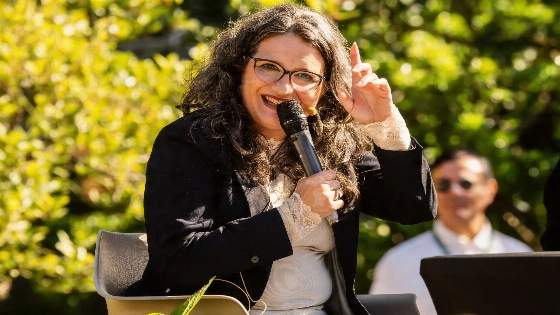
Leire Díez, once a key PSOE figure, is prepared to testify in court without party backing. Her decision may impact Spain's executive power and deepen internal party divisions.
Leire Díez, a former PSOE member known for her behind-the-scenes role, is now prepared to testify voluntarily before the courts, according to sources cited by LA RAZÓN. Her willingness to speak comes after severing all ties with the party, a move that could have significant consequences for Spain's executive branch and the Socialist Party's internal dynamics.
Those close to Díez confirm she no longer maintains any connection with the PSOE, suggesting her legal strategy is now entirely independent. This shift means she is no longer bound by party loyalty or internal decisions, and her testimony could implicate high-ranking officials. Díez has reportedly made clear to her circle that if she faces legal consequences, she will not do so alone, emphasizing her intent to reveal the full truth when the time comes.
The Supreme Court's recent ruling in the corruption case involving former minister José Luis Ábalos and his ex-advisor Koldo García has set a precedent, highlighting the benefits of cooperation and transparency in judicial investigations. The court notably recognized the collaboration of Víctor de Aldama, who avoided prison by providing key information. This context increases the potential impact of Díez's testimony, especially as she is not the only figure considering speaking out.
Santos Cerdán, identified as a central figure in an alleged network aimed at influencing sensitive judicial and police investigations, is also reportedly weighing the option of cooperating with authorities. Sources indicate that Cerdán's fall from his organizational role within the PSOE was driven not only by ongoing investigations from the Guardia Civil's UCO and the courts, but also by internal party struggles. His removal is seen as a political firewall to prevent the scandal from reaching higher levels of the party leadership.
The internal power shift has reportedly strengthened the faction aligned with Óscar López, Minister of Digital Transformation and Public Function, and his deputy Antonio Hernando. However, Hernando himself was present at a controversial meeting in Ferraz, where information about the father-in-law of Prime Minister Pedro Sánchez was discussed during a period of heightened scrutiny over Sánchez's wife, Begoña Gómez. The appointment of Anabel Mateos, Hernando's wife, as deputy in the new Organization Secretariat led by Rebeca Torró, is viewed as evidence of this internal realignment.
Díez's potential appearance before National Court judge Santiago Pedraz is expected to revive longstanding tensions within the PSOE. According to insiders, the party remains fractured, with deep divisions over control and strategy that predate recent scandals. Some describe the situation as a de facto split, with rival factions competing for influence and power.
Feeling abandoned by her former party, Díez is now seen as likely to expose details that could destabilize the PSOE. The uncertainty over how far she is willing to go has left many within the party uneasy. Her actions could influence the remainder of the current legislative term, especially as Prime Minister Pedro Sánchez faces mounting corruption allegations—contradicting his earlier promises to eradicate such practices.
Díez is determined not to be the sole scapegoat in a case that extends beyond her individual actions. She rejects the narrative promoted by Ferraz that her involvement was isolated and lacked party approval. The key question now is what information Díez holds and which party figures might be implicated if she testifies. Several names are already circulating among those who may have reason for concern.
Her decision comes as a new report from the Guardia Civil's UCO links Díez to another network that allegedly leveraged political and SEPI (Sociedad Estatal de Participaciones Industriales) contacts to secure favorable outcomes, including a public bailout for Tubos Reunidos. Investigators believe Díez played a leading role in arranging meetings with the Basque government's deputy leader and Cerdán, aiming to secure liquidity and renegotiate the terms of a €112.8 million rescue package for the company.
Recent developments in Spanish politics have highlighted the fragility of party unity and the risks of internal conflict. As seen in other high-profile cases, such as the return of 'La malquerida' to Madrid's stage, which sparked debate on social pressures and generational challenges, the current situation within the PSOE underscores the broader tensions shaping Spain's political landscape. For more on how cultural events intersect with social realities, see this analysis of Aitana Sánchez-Gijón's role in contemporary Spanish theatre: Aitana Sánchez-Gijón's performance in 'La malquerida' and its social impact.
For context, the PSOE (Spanish Socialist Workers' Party) is one of Spain's major political forces, and internal crises can have far-reaching effects on national governance. The SEPI is a state-owned holding company managing public stakes in key industries. The ongoing investigations and potential testimonies could influence not only the party's future but also the stability of Spain's coalition government.